
Makeup guide
A Step By Step Guide For Colour Correcting
Payal Bhattacharya
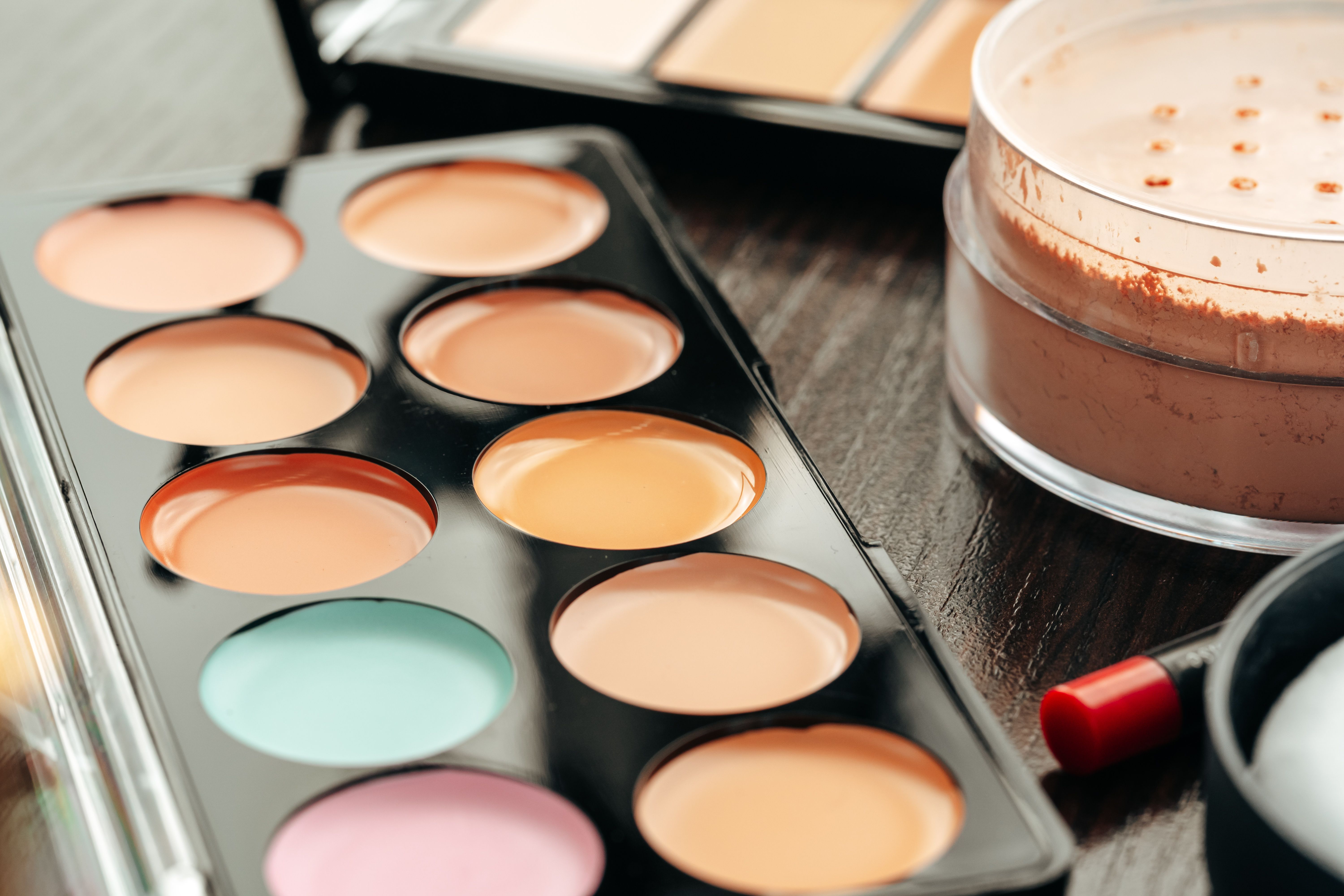
Cute pastel colours are no more the shades of our sundresses or nail polishes. They have slowly transcended into our makeup and made it more colourful than ever before. And no we aren’t talking about colourful eyeshadow palettes but colour correctors instead. If you are equally as befuddled seeing your favourite influencers using purple, green or peachy pink colour correctors to hide their imperfections, worry not; we are here with a guide to explain to you the different colour correctors, how to use them and when.
What Are Colour Correctors?
Colour correction is a must-know makeup technique if you want to hide a bunch of your imperfections using different colours. Unlike different foundations or concealers, these simply target specific issues like redness, dark circles, acne breakouts, etc. to figure out a way to cancel them out. These should, therefore, be layered on before a concealer or a foundation to camouflage the pigmentation and create a neutral palette. Thus, applying colour correctors can give a more defined and perfect look to your face. Now that you are curious, here is how these different, vibrant looks give you a uniform canvas.
Every attribute of makeup works perfectly well with the help of a colour wheel. Not just makeup, even the most basic things like painting, fashion, etc., is based on the theory of the colour wheel. The colour wheel theory places different colours known to mankind in a circle and is a practical combination to determine which colours look good together. Generally, colours on the opposite spectrum of the circle look good together and thus should be used to make them look more effective. For example, yellow and purple lie opposite on the colour wheel and work together amazingly. This is important to know because the mechanism of how to use colour correctors works exactly on that.
Decoding The colours
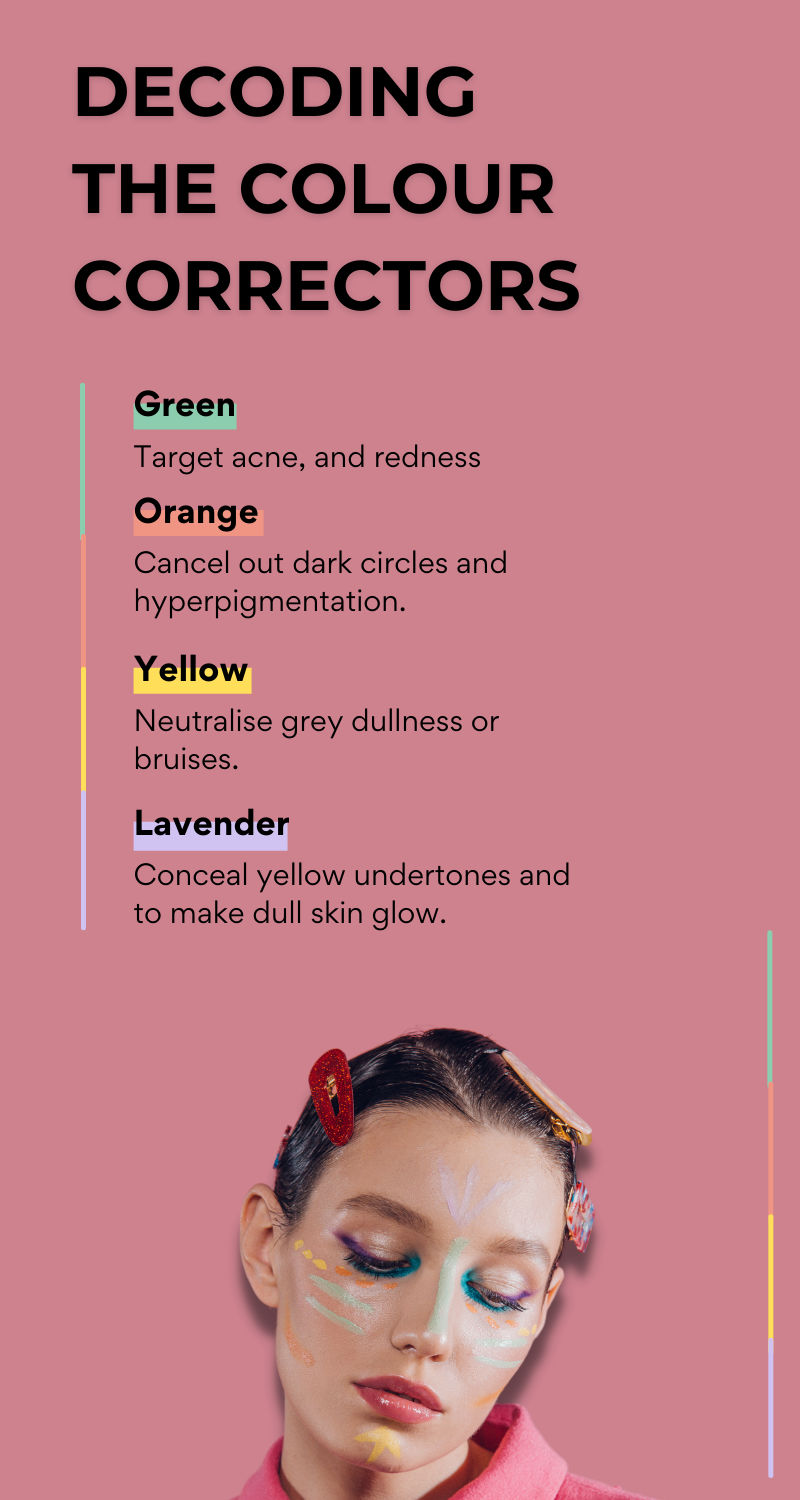
Now that we have figured out what the colour wheel is, let’s decode the different colour correctors makeup bloggers have used and continue to do so. However, before that, here are the common colour corrector colours that you should know moving forward- green, lavender, yellow, peach and orange.
1. How To Use A Green colour Corrector?
In the colour wheel green is the opposite of red, so naturally, these colour correctors target acne, rosacea breakouts and redness due to inflammation, allergy, etc. Thus, you can start using these colour correctors across your cheeks, on your forehead, between the cupid's brow or basically in areas you know you get acne and pimples frequently.
2. How To Use An Orange colour Corrector?
According to the colour wheel theory, peach or orange cancels out the blue. Therefore, use an orange colour corrector to cancel out deep dark circles. Use these under your eyes or near the areas where you have hyperpigmentation to cancel out some of the darkness. An orange shade is used for medium to dark skin tones whereas a peachy shade is more suitable for fair-skinned people.
3. How To Use A Yellow colour Corrector?
The right contrast for yellow colour on the colour wheel is purple, so using a yellow colour corrector can be beneficial to neutralise grey dullness, purple vein or bruises. It can work great on those who suffer from varicose veins or bruises easily. Besides, using a yellow corrector is a great way to brighten up your existing concealer shade.
4. How To Use A Lavender colour Corrector?
Purple steps in to conceal yellow undertones and makes dull skin glow. Thus, using a lavender colour corrector will help you to make your skin look fresh and hide any hyperpigmentation or dark spots.
How To Apply colour Correctors?
Colour correctors have the same application process as concealers. However, they are the second step in your makeup process. After applying a primer you can choose amongst the types of colour correctors as to which one best suits your skin issues and then apply it specifically to those areas. Post that, layer on your foundation to see a seamless look on your face. Just remember, if you still find some greyness with your makeup, you have chosen the wrong shade and may need to try this again. Once you are perfect at deciding the colour combinations, any beginner can layer makeup for themselves.
Now that we have the colour correctors uses and their colours sorted out, have fun playing and enjoying all these amazing pastels and paint the most amazing you have ever known- your face!
About Payal Bhattacharya
Payal is an editor at Purplle.com. She believes that the world will be a much better place if everyone owns a cat, it’s bizarre but true. She’s very sensitive and particular about her skincare routines and never skips it even for a single day. She loves to read about intimate hygiene and educate herself about female and male personal care which clearly reflects in her writings.
Latest Articles