

Feminine Hygiene
Pads vs. Tampons - Which Ones to Use?
Payal Bhattacharya
Introduction
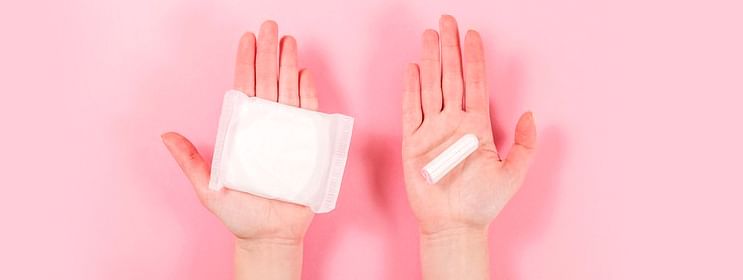
Most people think of tampons and pads when talking about feminine hygiene products. Tampons have become very popular in most urban areas of the world, but other parts of the globe prefer using a pad. This article will discuss both these products and help you choose which one is better for you.
The decision to use the right feminine hygiene product is crucial for your health and mental peace. It should fit your lifestyle and needs. Pads have been an older practice among all ages. It is generally the first female hygiene product introduced to a young girl simply because of its ease of applicability. However, pads also come with risks and difficulties.
Tampons are a great way to deal with problems like leakages and visibility. However, many women still have issues wearing tampons, especially while inserting them. Let’s find out more about the difference between tampons and pads.
Difference between Tampons and Pads
The tampon is a cylindrical-shaped menstrual product designed to be easily inserted inside the vagina and absorb vaginal secretions and menstrual blood. The absorbent material is generally made of cotton or rayon, and the size is tiny to fit easily. Using a tampon is quite easy once it is inserted. You can pull it out quickly with the help of the loose string designed to stay outside. According to the Food and Drug Administration (FDA), you should not leave the tampon for more than 8 hours inside your body.
The pad, on the other hand, is relatively simple to use. They are designed as absorbent linings that are stuck to the underwear to absorb menstrual flood and vaginal fluids when you wear your underwear. They are generally made of cotton or super absorbent polymers. Pads come in multiple sizes that can be used according to the heaviness of your flow. It is advised to change pads every 4 to 5 hours.
Tampons vs. Pads
Now that we know what exactly tampons and pads are, let’s find out how they can be different in their applicability for different occasions.
1. The Pros of Tampons
- Tampons are designed to be better in use than pads. They are very small and can be easily carried in your purse or pocket.
- You can wear a tampon for every occasion. There is no fear of visibility. You won’t feel them once they are inside your vagina.
- Moreover, they are very comfortable for your periods. You can even swim wearing tampons. There is no fear of leakage in almost any situation, whether you are jumping, running, doing adventure sports, or sleeping like a log.
2. Cons of Tampons
- Some women may find it tough to insert the tampon inside the vagina. At times, it may take some breathing exercises to push it in. It can be quite a task for first-time users.
- Tampons also carry the risk of drying out your vagina and causing irritation if used for too long. They are not recommended for overnight usage. Exposure to tampons for more extended periods can cause infections like UTIs.
- There is also the risk of TSS or Toxic Shock Syndrome. Even though it’s sporadic, it can be a complicated condition. The syndrome generally results from an overgrowth of bacteria inside the vagina. Symptoms include diarrhea, vomiting, and fever. You can reduce the risk by using organic tampons that are skin-friendly and do not dry out your vagina. More importantly, You should change it within 4 to 5 hours.
3. The Pros of Pads
- Pads, as conventional hygiene products, are easy to use. You just peel off the wrapper and stick it in your underwear. Even though they are not as small as tampons, most pads nowadays come in packets that are easy to carry around in purses and bags.
- You can better estimate your flow with pads than tampons and change them accordingly. Modern organic pads are quite skin-friendly and do not cause skin irritation.
- There is less risk of UTIs and TSS. With regular changing and good hygiene practices, pads are convenient for your vagina.
4. Cons of Pads
- Even though modern pads are very thin and are great for performing most activities, swimming may not be possible in a pad. They risk getting soggy if they soak up any water, which can be a disturbing experience.
- Pads may not be as discreet as tampons. Bodycon or skinny dresses do have the risk of visibility. Even though it is not a problem, tampons can be better if you are very conscious of your looks in certain clothes.
- Placing the pad properly can be a problem for some girls. If the placement is not correct or if the pad is not stuck properly, movement can cause pad displacement, resulting in staining.
- Pads do not cause any severe problems, but some women may face skin irritation and rashes due to wetness caused during periods. However, it also depends on how heavy periods you have and the type you use.
What is better- Tampons or Pads?
Both tampons and pads have their unique pros and cons. It all boils down to what kind of expectations you have from your menstrual hygiene product.
If you swim regularly or have to do heavy tasks during your period, tampons are a better option. Pads can be a comfortable choice for most women who do not want any risk of vaginal diseases. In any case, it’s ideal to use clean and organic products and change them as frequently as possible.
Read More - How to Use Tampons safely?
Latest Articles








About Payal Bhattacharya
Payal is an editor at Purplle.com. She believes that the world will be a much better place if everyone owns a cat, it’s bizarre but true. She’s very sensitive and particular about her skincare routines and never skips it even for a single day. She loves to read about intimate hygiene and educate herself about female and male personal care which clearly reflects in her writings.