
Haircare
How To Use Henna For Body And Hair
Payal Bhattacharya
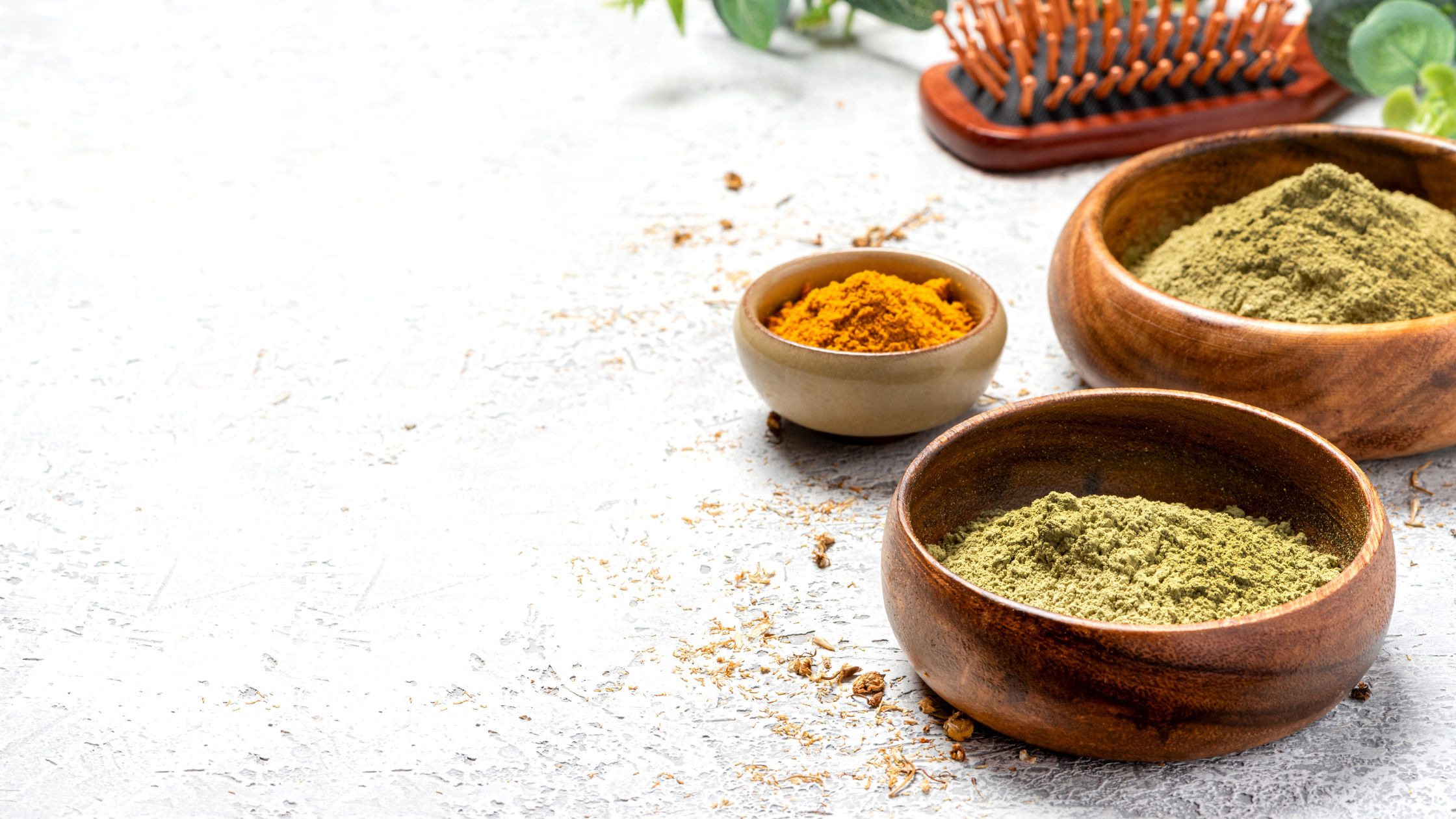
Scientifically known as "Lawsonia inermis", henna is a shrub native to Africa and the Middle East. The powder that we use nowadays is made by crushing dried henna leaves. Henna promotes hair growth and also reverts premature greying. People usually use henna in combination with other conditioning agents.
Nowadays, it is mainly used to dye your hair naturally without adding any harmful chemicals. Natural henna will lend you an auburn/coppery tinge to your hair. However, if you want a more realistic black or brownish colour, there are other forms of natural dyes also.
So, where did henna originate?
Many people think henna originated in India because of its widespread use to make bridal henna designs during weddings. However, history tells us that it originated in Egypt and was rampantly used in beauty practices. For example, pharaohs dyed their fingers and nails with henna and decorated themselves with henna tattoos.
Types of henna dyes:
Natural- Natural henna produces a reddish-brown stain after it is applied to hair. It is the purest form of henna, and if you want to dye your hair naturally without any chemical damage, this is the one for you.
Neutral- This kind of henna doesn't lend any colour to your hair. The leaves are from a plant called Senna Italica. You can use this to moisturise your scalp and hair without using any chemicals naturally.
Black/Indigo- If you want to dye your hair black or brownish-black, then this is what you use. This is not pure henna. This is derived from the Indigo plant. However, if you have sensitive skin, then it can cause severe allergies and rashes. It contains several unlisted dyes and chemicals such as PPD(para-phenylenediamine). When left on your hair for more than 2-3 days, it might cause permanent scarring. It is recommended to use indigo powder along with henna powder to dye your hair in natural black.
Henna for Skin
Henna skin benefits range from bactericidal to anti-ageing. The area underneath our nails and the cuticles often get messy since they are always in contact with other surfaces, but applying henna can help remove and neutralize these bacteria and other impurities. It is also applied to minor scars and wounds due to its healing properties. Recent studies have led scientists to believe that they might also have anti-ageing properties. Continuous use of henna juice and oil have significantly reduced fine lines and wrinkles and can also help in treating minor skin infections and blemishes.
Henna Hair Benefits
How often have you heard your grandmother or mother advise you to apply henna every time you face hair issues? Yep, we have lost count! However, we are here to prove that they were right. Here's how:
It has antimicrobial and antifungal properties and thus helps fight against common scalp issues like itchiness, redness and dandruff. Henna gently removes impurities from the hair and thus prevents the recurrence of dandruff. Moreover, henna has a cooling effect on the scalp.
Our scalp needs to be at a certain pH to be healthy. A lot of times, excessive oil and sebum production can mess up this balance. Applying henna helps in balancing the pH and oil production in the scalp. They restore the normal functioning of the sebaceous glands by unclogging the hair follicles and removing excess oil.
Due to the functions mentioned above, your scalp health is restored. This helps promote faster hair growth and improves the hair texture.
If you are suffering from dry and damaged hair then henna can help. Apply henna for a month and see the difference! Henna powder has many nutrients that repair damaged hair and seals hair cuticles, thus controlling oil and sebum production.
Henna intensely hydrates dry hair by coating each shaft with a protective moisture barrier. If you use it along with some other conditioning agents, the results will be significantly better. You can say bye-bye to split ends and roughness from now on.
A Detailed Guide on how to apply Henna on Hair
The first step is to figure out how to achieve the colour you want. For example, a lot of women prefer slightly brown but natural-looking hair. For them, many brands recommend mixing the indigo powder with henna powder to get the desired results.
However, a lot of other henna powder doesn't need mixing. The colour you will get depends on what you are using and how much time you leave it on your scalp. You can get a hair colour ranging from light brown to dark reddish-brown based on that. Here's what you need to do:
- Soak the henna powder in an iron skillet into tea water or coffee water and leave them on overnight. Note the quantity. For short hair- about 100 gms, for mid-length hair about 200 gms henna and long hair soak about 300 gms. If you want a more reddish tinge, soaking in coffee water would be better.
- Squeeze in some lemon juice. For additional conditioning, throw in a raw egg or some yoghurt.
- The next day, apply this paste and leave it on for 1-2 hours based on how intense you want your colour to be.
- Wash it off and rinse well with cold water. Wash as many times as you possibly need to. But, DO NOT use any shampoo.
- The next day, use a good clarifying shampoo to wash your hair. Choose something organic, preferably with hibiscus, since they are gently clean without stripping the scalp of its natural oils.
Here are some easy DIY hair packs with henna to treat specific hair and scalp conditions:
- If you are suffering from excessive hair loss, then an amla, henna and egg mixture is the perfect protein-packed hair mask for you.
- Are you suffering from dull and lifeless hair? Here's what you can do! Make a paste with two tablespoons of henna and one tablespoon of shikakai along with a raw egg and some curd. It will add an instant glow and shine to your hair.
- A henna and banana hair pack can help cure split ends. Mash one ripe banana to 2-3 tablespoons of henna powder along with some olive oil. Apply this at least once a week for a month. You will see significant improvement.
- Are you suffering from an oily scalp? Use a hair pack made of henna and Multani mitti. This will gently cleanse and remove excess oil from your scalp.
Now, as fun as this sounds, most of us don't have the time for all these. Since you must be looking for enriched henna powder with some added benefits, here are our top recommendations.
Our Recommendations:
Alps Goodness Henna Powder(250gms)
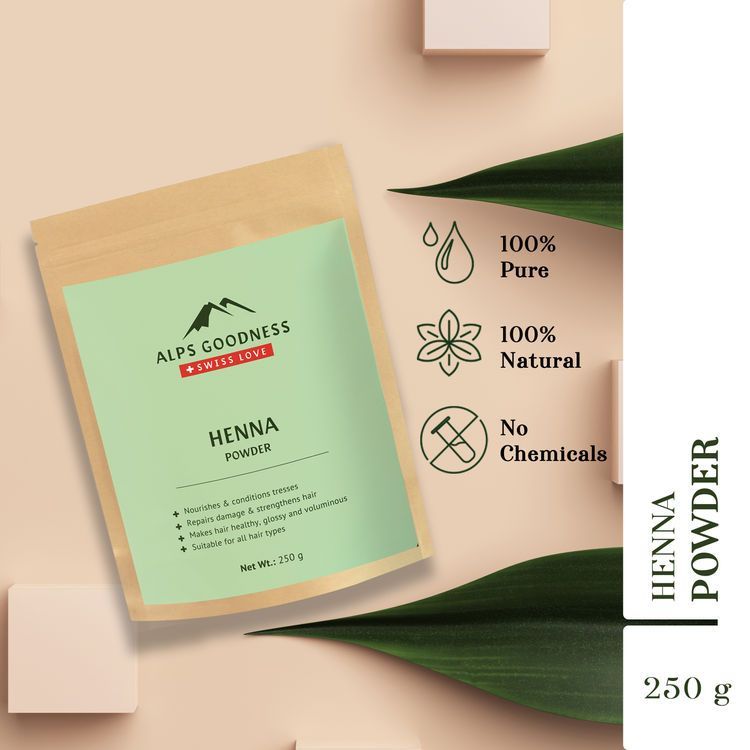
Pure henna powder with a gentle formulation suited explicitly for dry and damaged hair. Use this along with any conditioning agent and get those shiny locks.
Precious and Nature's Organic Henna Powder( 200gm)
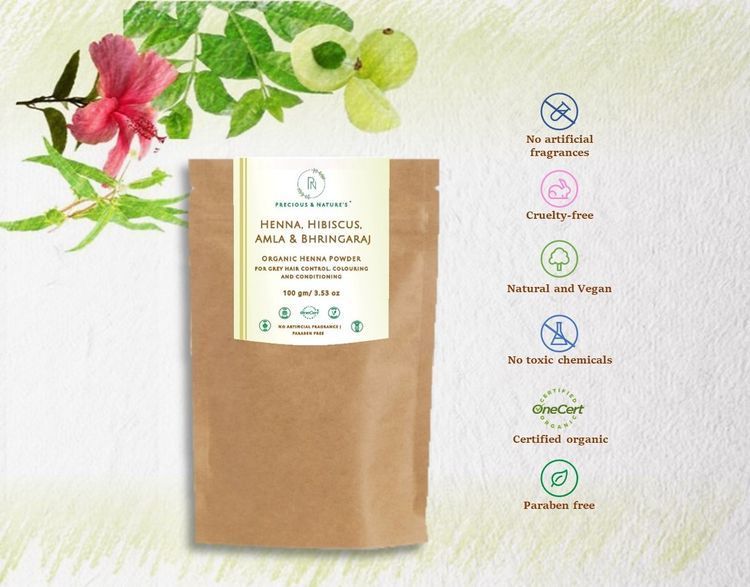
Fortified with the goodness of amla and bhringraj, regular use will indeed promote strong and healthy hair growth. It also contains neem and shikakai that prevents premature greying, and repair split ends.
Alps Goodness Powder Neem(50gm)
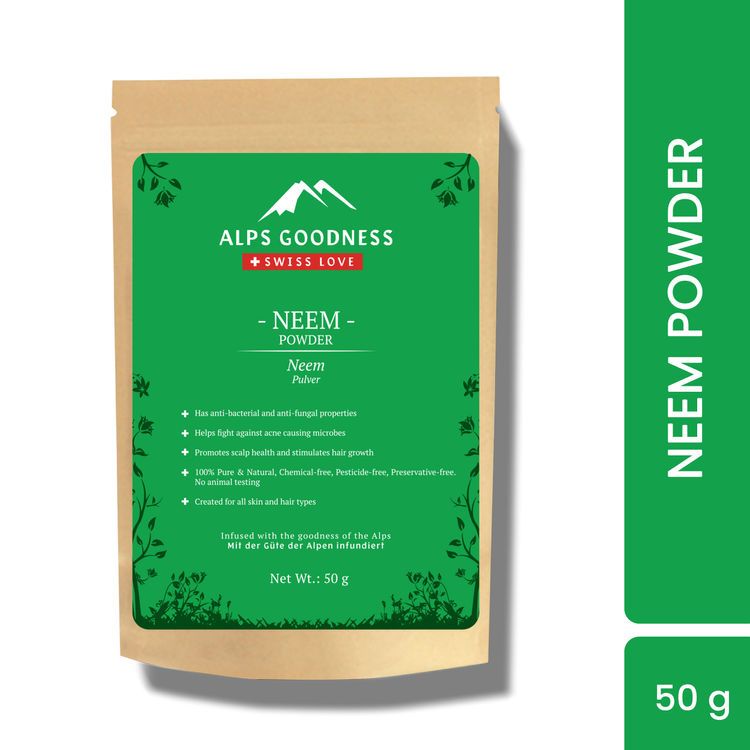
Suffering from dry and itchy scalp? This powder fortified with activated neem extracts fights dandruff and helps soothe irritation. What's more, it's also suitable for treating acne and pimples and helps fight blemishes.
Vayam Ayurveda Hair Colour Pack-Indigo(40gms)
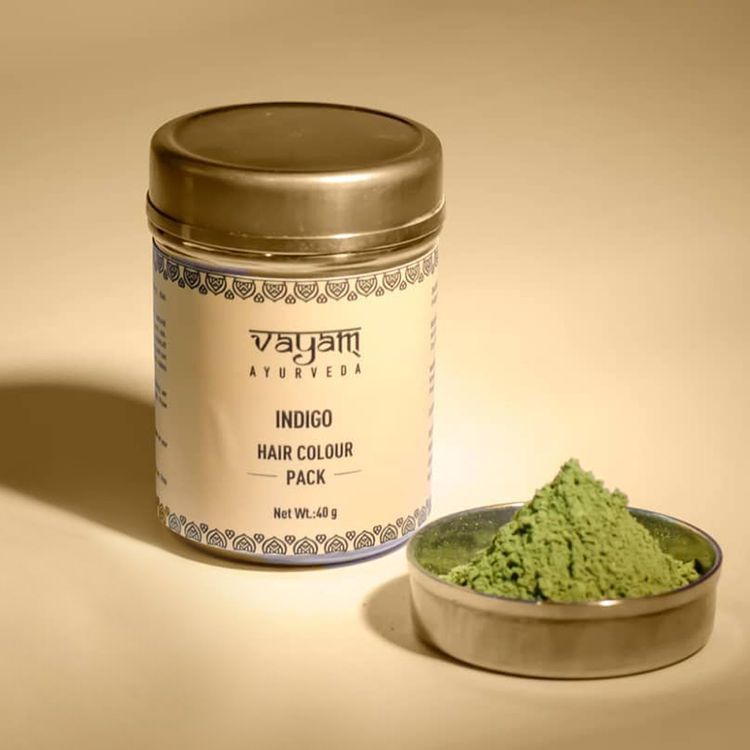
If you wish to conceal those stray grey hairs, this is for you! Manufactured from various Ayurvedic ingredients, this pack will treat dandruff and give you naturally shiny black hair.
Kama Ayurveda Organic Henna powder( 100 gms)
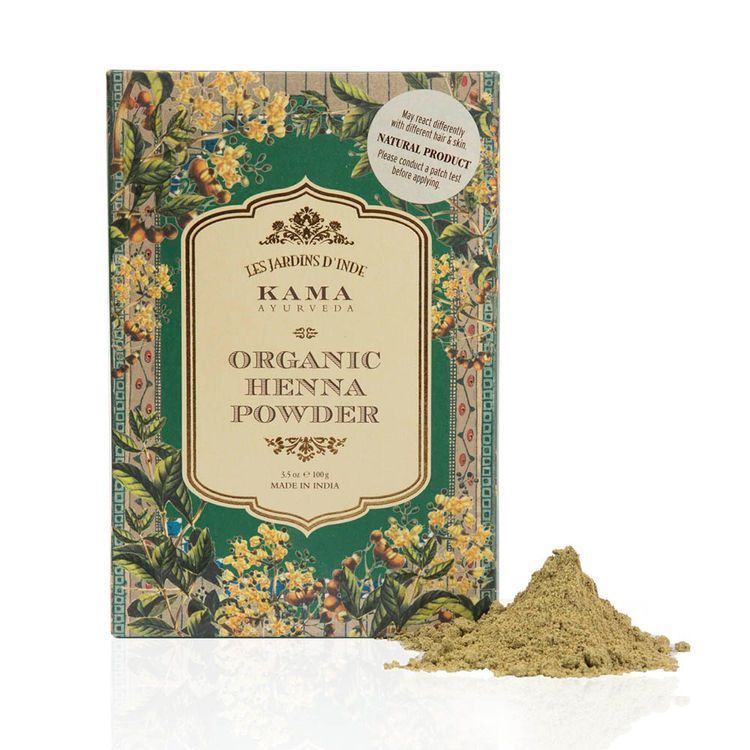
Containing antimicrobial and antifungal properties, this 100% organic henna powder can give you a wide range of colours from light brown to auburn to deep copper, depending on how long you choose to leave it on.
Some things to remember:
- Pure henna is mostly safe to use and doesn't have any adverse effects. However, most henna powders bought from stores contain certain chemicals that might cause an allergic reaction or, worse, trigger certain symptoms like asthma. So, choose henna powder very carefully.
- ALWAYS make sure to shampoo well before applying henna. Do not use any conditioner.
- If your hair is dehydrated and you have a sensitive scalp, do not use the henna powder directly. Add some conditioning agents like raw egg or curd for an extra moisture boost.
- Take care not to let any henna near your eye area. This may cause irritation and redness in the eyes.
Conclusion
There is no better way to colour your hair naturally than henna. However, you have to be careful about the quality. Purplle is India's one-stop shop for natural beauty products. You can buy authentic and organic henna powder from us at attractive prices. A lot of adulterated henna can contain PPD that cause severe allergic reactions. So, make a habit of reading the ingredients label carefully before buying one. You can find high-quality organic henna powders at Purplle at discounted prices. Shop now!
About Payal Bhattacharya
Payal is an editor at Purplle.com. She believes that the world will be a much better place if everyone owns a cat, it’s bizarre but true. She’s very sensitive and particular about her skincare routines and never skips it even for a single day. She loves to read about intimate hygiene and educate herself about female and male personal care which clearly reflects in her writings.
Latest Articles