

Skincare
Skincare Tips for Different Skin Types
Payal Bhattacharya
The most important step in skin care is determining your skin type. Without doing so, there is a high chance that you may be using the wrong type of product which can take out essential time in your skin’s recovery and repair. Therefore, here is a guide on different types of skin, how to determine your kind and which kind of skin care you must choose depending on that.
How To Know Your Skin Type
Oil, dry or combination aren’t just words that are favorite beauty bloggers say out of nowhere but they are rather crucial in determining the well being and health of your skin.
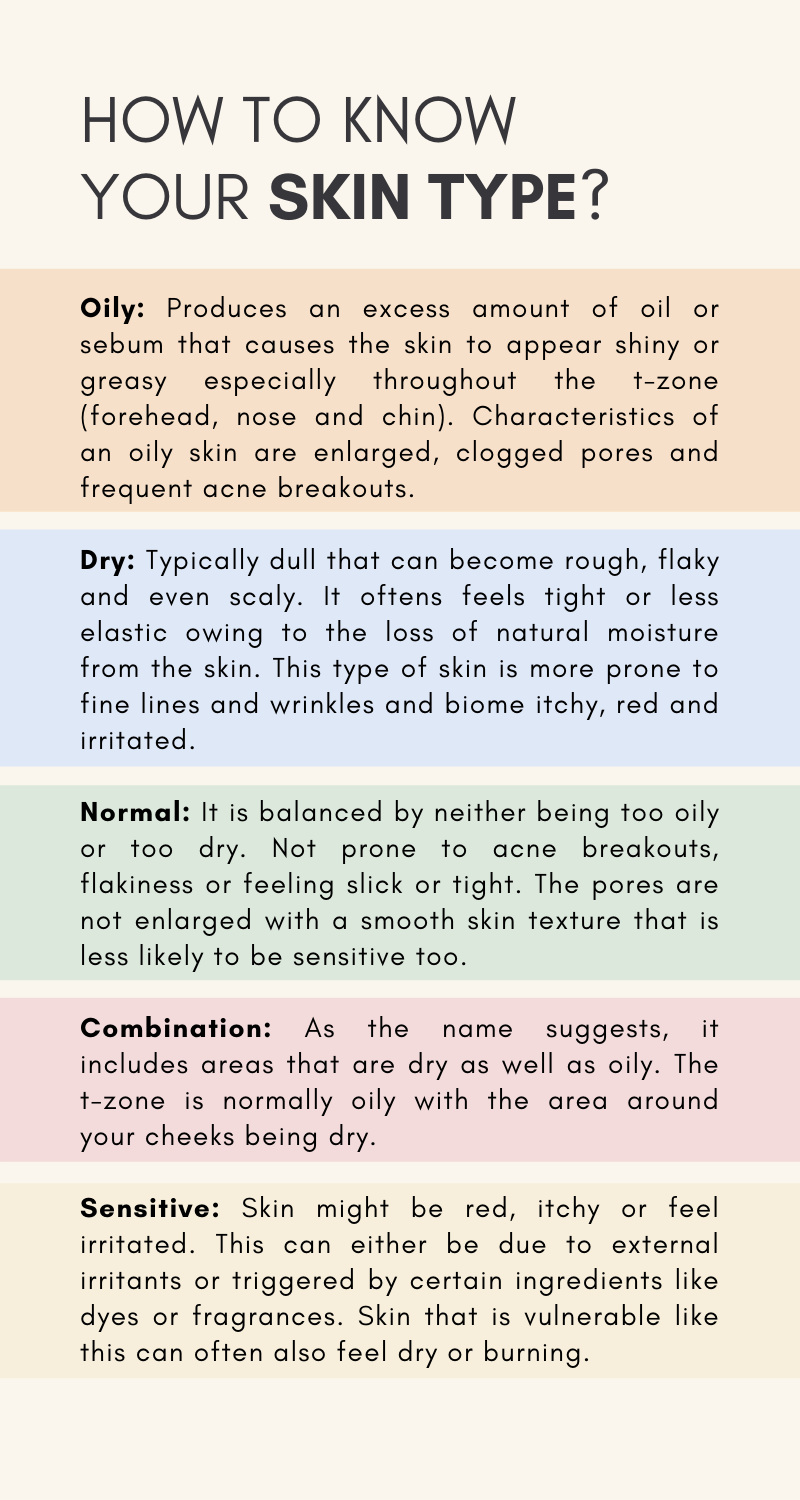
- Oily: Produces an excess amount of oil or sebum that causes the skin to appear shiny or greasy especially throughout the t-zone (forehead, nose and chin). Characteristics of an oily skin are enlarged, clogged pores and frequent acne breakouts.
- Dry: Typically dull that can become rough, flaky and even scaly. It often feels tight or less elastic owing to the loss of natural moisture from the skin. This type of skin is more prone to fine lines and wrinkles and biome itchy, red and irritated.
- Normal: It is balanced by neither being too oily or too dry. Not prone to acne breakouts, flakiness or feeling slick or tight. The pores are not enlarged with a smooth skin texture that is less likely to be sensitive too.
- Combination: As the name suggests, it includes areas that are dry as well as oily. The t-zone is normally oily with the area around your cheeks being dry.
- Sensitive: Skin might be red, itchy or feel irritated. This can either be due to external irritants or triggered by certain ingredients like dyes or fragrances. Skin that is vulnerable like this can often also feel dry or burning.
How To Determine Your Skin Type
If you are still confused about the type of skin you have, here are two easy, at home procedures you can try to figure out which is your skin type.
1. Bare Faced Method:
Observing as we know is the best way to understand your skin and its needs. Thus, to understand the kind of skin type you have, wash your face with a gentle cleanser and pat it completely dry. Wait for 30 minutes and see how your sin starts to behave without being under the influence of any other products.
- If your skin feels shiny or greasy throughout, you have oily skin.
- If it feels patchy, dry or tight, you have dry skin.
- If the shine is simply contained in your t-zone, you have combination skin.
- If it feels hydrated and comfortable, but not oily or slick, you have normal skin.
- If your skin begins to feel irritated or is very red, you have sensitive skin.
2. Blotting Paper Method:
Blotting sheets are sheets that absorb oil when they are pressed to certain areas of our face. This way, therefore, is an excellent way to determine the difference between dry and oily skin type. After washing your face, simply pat it dry and allow it to rest for 30 minutes. Then press blotting sheets over various parts of your face, especially the t-zone to see how much oil they absorb. Based on these oily markings, you can determine your skin type.
- If the sheets are mostly dry and have absorbed almost little to no oil around your face, then you have dry skin.
- If these sheets are heavily soaked with oil in all the areas of the face, you have an oily skin type.
- If the oil saturated on the sheets is predominantly collected from your t-zone while your cheeks remain dry, then you have combination skin.
- If you see minimal oil from your skin but the skin doesn’t feel irritated, dull or tight, you have normal skin.
Skin Care Tips According to Skin Types
Now that we have established the different skin types and how to distinguish between each skin type, here are the ways to control and heal the issues caused by these skin types.
1. Dry Skin:
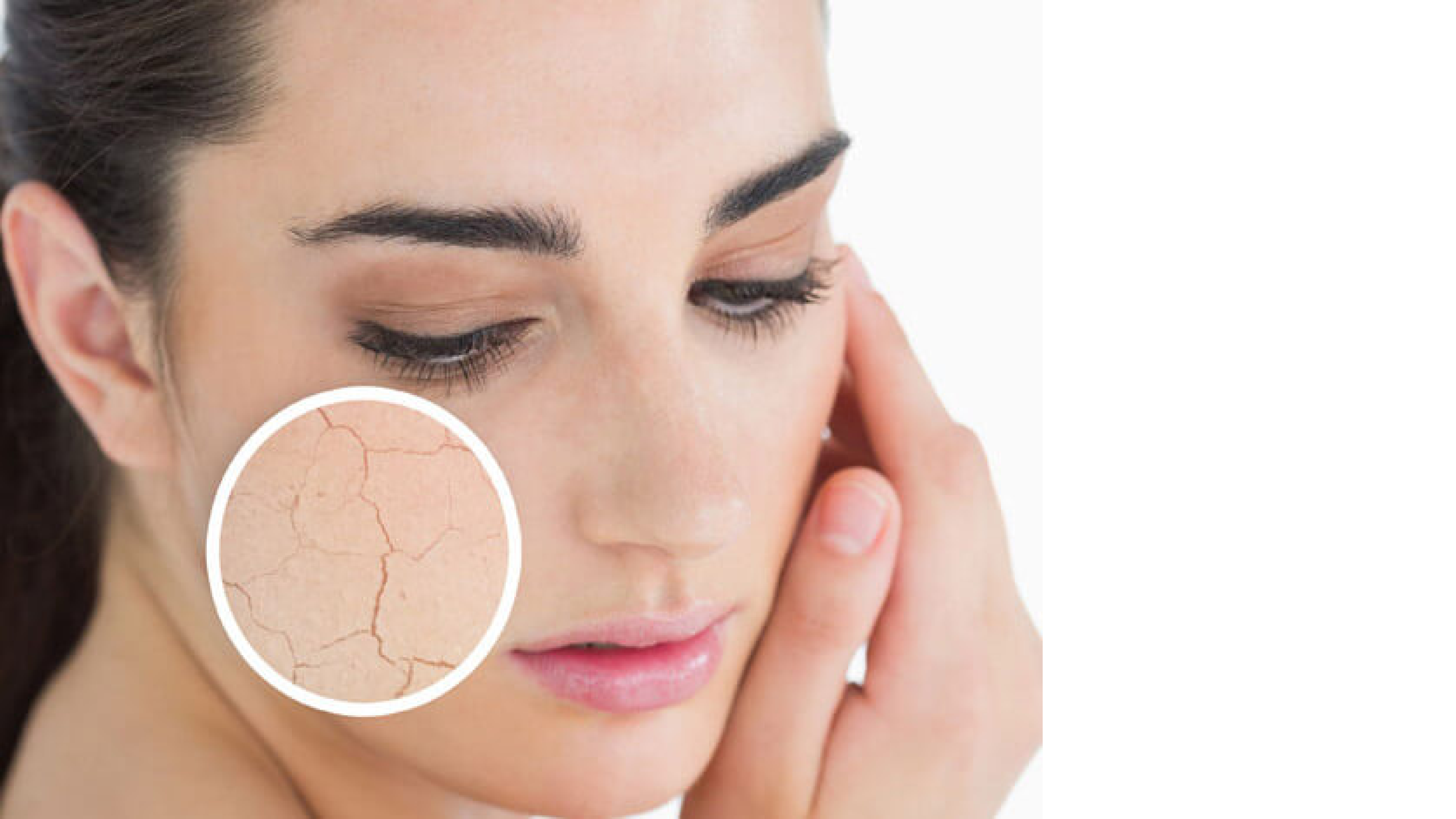
Since dry skin is mostly patchy or dehydrated with abundant loss in natural moisture balance from the face, it is easily prone to visible lines like fine lines and wrinkles. Dry skin can also make your skin feel tight and stretched thereby being the reason for loss of collagen. Therefore, to cure dry skin, you need products ensuring long lasting moisturization to the skin and intense hydration.
- Daily exfoliation with gentle, non-abrasive ingredients can be helpful in promoting skin cell turnover without removing skin’s natural oils. It can also be helpful for serums and treatments to get absorbed easily without the added layer of dead skin cells and dirt.
- Use serums containing hyaluronic acid, glycerin or marine active ingredients like algae since they help to attract water or moisture and deliver it directly to skin cells.
Use moisturizers that are abundant in emollients (skin softeners) like squalene, camellia oil, dimethicone, petroleum jelly, etc. to hydrate your skin evenly and effectively.
Checkout: How to Take Care OF Your Dry Skin- Easy Tips & Tricks
2. Oily Skin:

Quite prone to naturally produced oils that can seep into your pores, oily skin has enlarged pores and is quite prone to acne. However, oily skin as looks younger and more supple because it has more natural moisture and is less likely to wrinkle. It can also give rise to an acne prone skin, cause black heads and have congested pores. Therefore, to curb oily skin you need a skincare routine that balances the tone and texture of your skin.
- Start with a gentle exfoliator without abrasives that controls the production of oil in your skin and gets rid of the oil or dirt accumulated in your pores.
- Use AHAs and BHAs that will take care of hyperpigmentation caused by oily skin or dark spots after break outs. The acids will help lighten your skin by polishing away the upper most layer and reveal newer cells.
- Use antibacterial products having the quality to also control sebum production like tea tree oil, salicylic acid, glycolic acid, benzoyl peroxide, etc.
Checkout: Your ultimate guide to best skincare for oily skin - Purplle
3. Normal Skin:

Since normal skin is characterized by neither the presence of too much oil nor complete dryness, it is essential that we maintain this balance and provide the skin with products to nourish and enhance the skin’s tone and texture.
- Use a gentle, exfoliating cleanser with non-irritating hydrating AHA/BHA exfoliant to ensure that you get rid of the dirt and grime collected on your skin over the course of the day.
- Use a barrier restoring moisturizing cream that will help stabilize the moisture content in your skin and a replenishing skin toner with antioxidants to enrich the skin.
Finally, apply a mix of skin balancing and skin recovering products that will nourish your skin and help it defend against environmental factors.
4. Combination Skin:

Those with combination skin are not prone to breakouts on their cheeks, and tend to have a well-moisturized t-zone. Thus, you need a mix of products that have the balance between hydrating and non-greasy ingredients.
- Start with a gentle exfoliator containing a mix of vitamin E, hyaluronic acid with salicylic acid to keep your t-zones and cheeks under check and clean.
- Proceed with moisturizers that are not too heavy but substantial enough to retain the moisture on your face especially the cheeks.
- Use moisturizers with a gel-based texture since it doesn’t leave a greasy texture behind. Ingredients like jojoba oil or shea butter can be helpful to do the needful.
5. Sensitive Skin:

Managing sensitive skin can be challenging because it is hard to determine the reason behind sensitive skin in most cases. Therefore, it is important to not lather your skin with products and just go on one by one when introducing your skin to a new skin care product.
- Patch test a formula or skincare ingredient on your skin and see the reaction of it over a short and prolonged time period.
- Look for labels that identify formulas as non-irritating and non-sensitizing and free of parabens, synthetic fragrances, mineral oil, sulfate detergents, phthalates, urea, etc as these ingredients can result in redness and itchiness.
This way you can now take care of each and every skin type and ensure that your skin is always healthy and prepared for any skin problem. Using essential Oils is another good way of keeping skin healthy. Check out the essential oils.
Read More
- 5 Best Facial Oils for All Skin Types
- Best gel-based moisturizer available in India for all skin types
- 10 Fabulous Face Washes for All Skin Types
- 10 Best Sunscreens & Lotions For All Skin Types
Latest Articles





About Payal Bhattacharya
Payal is an editor at Purplle.com. She believes that the world will be a much better place if everyone owns a cat, it’s bizarre but true. She’s very sensitive and particular about her skincare routines and never skips it even for a single day. She loves to read about intimate hygiene and educate herself about female and male personal care which clearly reflects in her writings.