
Skincare
The Essentials of Essential Oils
Payal Bhattacharya
You all must have come across the term ‘Jadee Bootee’ while learning about Ramayana from your grandparents. Those ‘jadee bootees’ are nothing but herb and plant extracts; they are infused with other oils in the modern world and marketed as essential oils. Essential oils have been predominant throughout history due to their aromatic and medicinal properties. Below is a brief introduction to essential oils and their benefits on skin and hair for the unversed audience.
What are Essential Oils?
Essential oils are compounds extracted from various herbs and plants infused with other carrier oils. The unique aromatic compounds provide the essential oils with their characteristic essence. They are generally obtained via distillation/evaporation or mechanical methods such as cold pressing.
The means of extraction is extremely crucial in terms of essential oils, as the oils gathered using chemical processes are not considered genuine essential oils. Our modern beauty and skincare products are often infused with one or more essential oils.
Applications of Essential Oils
Different compounds present in essential oils interact with our bodies in different ways. Essential oils are most widely used in aromatherapy, in which they are inhaled using various methods. They are not supposed to be swallowed or consumed as oral supplements.
According to research studies, inhaling the various aromas of the essential oils can stimulate the limbic system (a part of the brain responsible for emotions, behaviours and long-term memory). It is also worth noting that the limbic system plays an essential role in forming memories, explaining the reason behind familiar smells triggering memories or emotions.
Essential oils are also known to improve hair and skin health. They possess anti-inflammatory and anti-oxidant properties, which help nourish, revitalise and strengthen our skin and hair. They can either be infused with products from your beauty regime or mixed with other carrier oils and used for topical application. Here are some of the most widely practised uses of essential oils for skin and hair:
Benefits of Essential Oils for Your Skin
Skin is the largest organ in our body. It is the torchbearer of our health, age and beauty. Therefore, one should take utmost care of their skin and nourish it using the diverse range of skincare products available. Some of the benefits of using essential oils on skin are:
- Anti-inflammatory
- Help reduce skin irritation and discolouration
- Help balance out moisture levels of our skin
- Help restore the natural skin tone
- Act as analgesic and stimulants
- Prevent excess secretion of sebum
- Protect skin from oxidative stress and environmental damage
- Synthesise Collagen in the body
Procedure for Essential Oil Skin Application
Essential oils can be applied as topical solutions on the skin. If you are thinking of topically applying the essential oils to your skin, you should ensure that you do a patch test first. During the patch test, you use a small amount of the diluted essential oil on your skin and wait to check if your body is allergic to the essential oil. After completing the patch test, you can apply them topically and massage the area or add a few drops in your bathing water and bathe with it.
You can infuse them with carrier oils such as almond oil or olive oil for topical application. The topical application followed by a massage is best when using essential oils to treat skin conditions. However, bathing in essential oils can work in areas that are generally hard to reach, like your back.
1.Alps Goodness Pure Essential Oil –
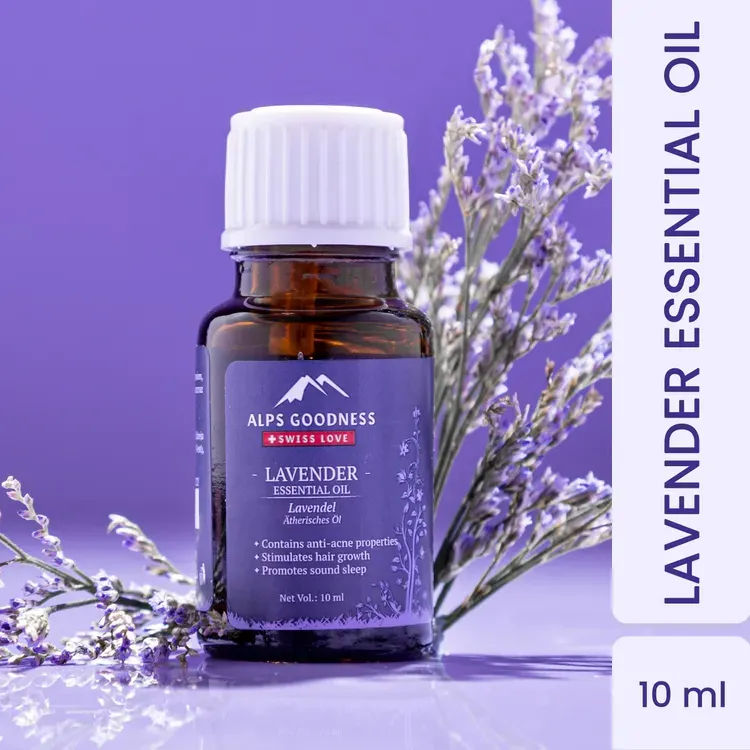
The Alps Goodness Lavender Essential Oil helps treat and reduce acne scars. It also helps even the skin tone, providing a radiant complexion. The Alps Goodness Pure Essential Oil – Lavender is suitable for all skin types, ensuring that you are worry-free during application.
Checkout: Lavender Essential Oil: Benefits & How to Use it
2.Good Vibes 100% Natural Jojoba Skin Replenishing Facial Oil
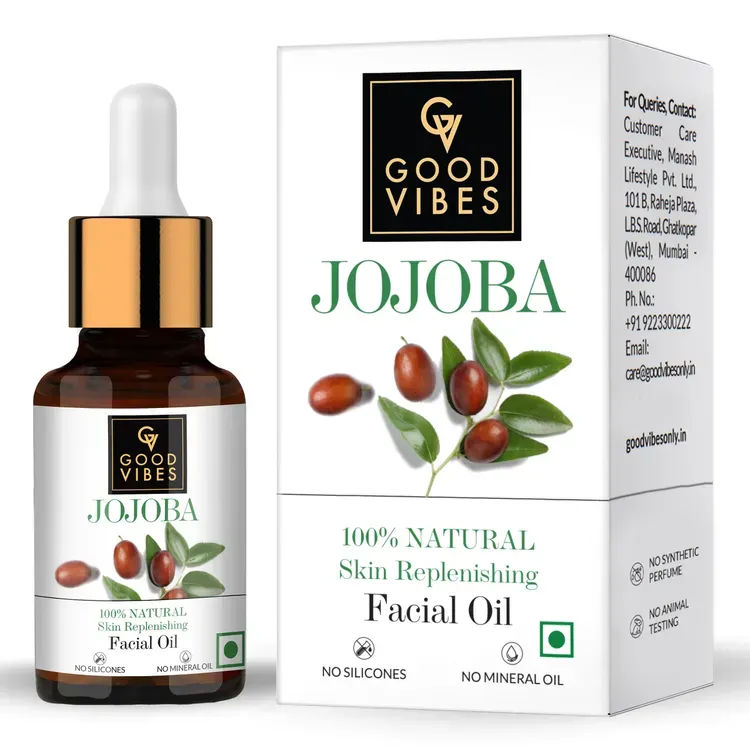
It is known for helping to control acne and also minimising scar appearance. Suitable for all skin types, it helps control excess sebum, making the skin lighter and radiant. The Good Vibes 100% Natural Jojoba Skin Replenishing Facial Oil is cruelty-free, paraben and sulfate-free.
3.Alps Goodness Pure Essential Oil – Rosemary
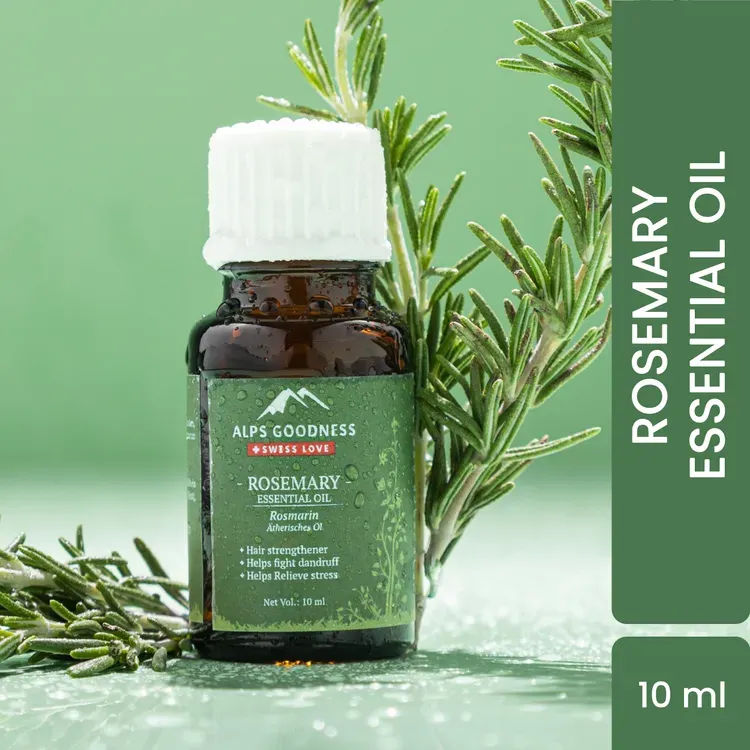
The Alps Goodness Pure Essential Oil is perfect for all skin types. Rosemary is known to provide iron, calcium and other nourishing nutrients to your skin. It also helps fight against common skin conditions like cellulite and acne while also aiding in skin firming. The Alps Goodness provides chemical free products for skincare and beauty.
Essential Oil Hair Benefits
We all absolutely love our hair. Like our skin, even the most minor changes in our health and diet are directly reflected through our hair. While shampoos and conditioners usually keep our hair and scalp healthy and nourished, using essential oils can help people with hair-related disorders. These are a few benefits of using essential oils on hair:
- Improving blood circulation in the scalp
- Help to increase the number of hair follicles and their depth
- Actively prevents hairfall
- Stimulates the scalp
- Beneficial for treating Alopecia Areata and other hair disorders
- Antifungal and Antibacterial
- Improving hair texture
- Reduce Hair breakage
- Repel Head Lice
- Reduce Dandruff
- Reduces dryness and itchiness
How to use Essential oils on Hair?
Essential Oils can be used on your hair in several ways. You can mix them with a carrier oil, apply them to your scalp, and massage them. After applying the oil mixture to your scalp, you must cover your head with a towel or shower cap. Depending on your hair texture, you can either wash it after 30 minutes, keep it overnight, shampoo it in the morning or keep it as a leave-in conditioner.
You must be aware that direct application of essential oils can cause irritation and sometimes even trigger allergic reactions. Therefore, it is better to use a small amount of the essential oil mixture on a small scalp area and test it for allergic reactions before adding the concoction to your haircare routine. Additionally, reading the product label to get instructions on dilution of the oils and the recommended usage amounts of the essential oil can help.
1.Deve Herbes Pure Essential Thyme Oil
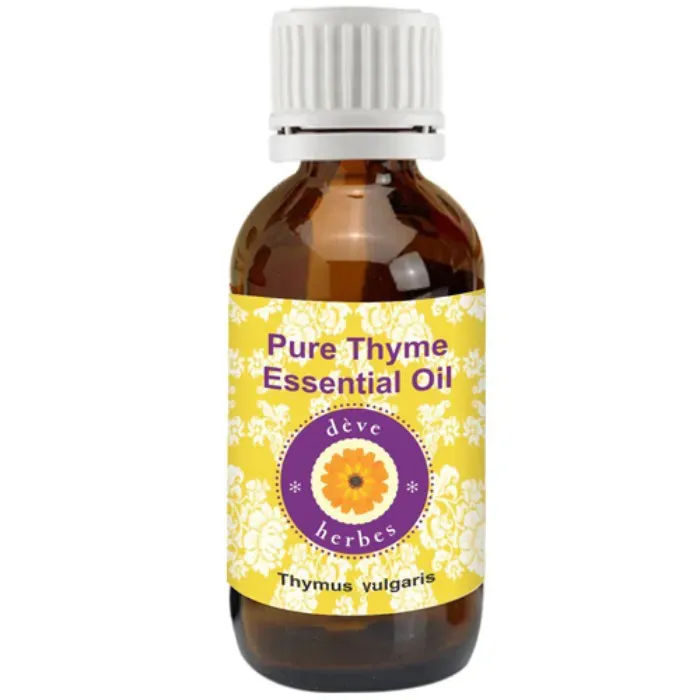
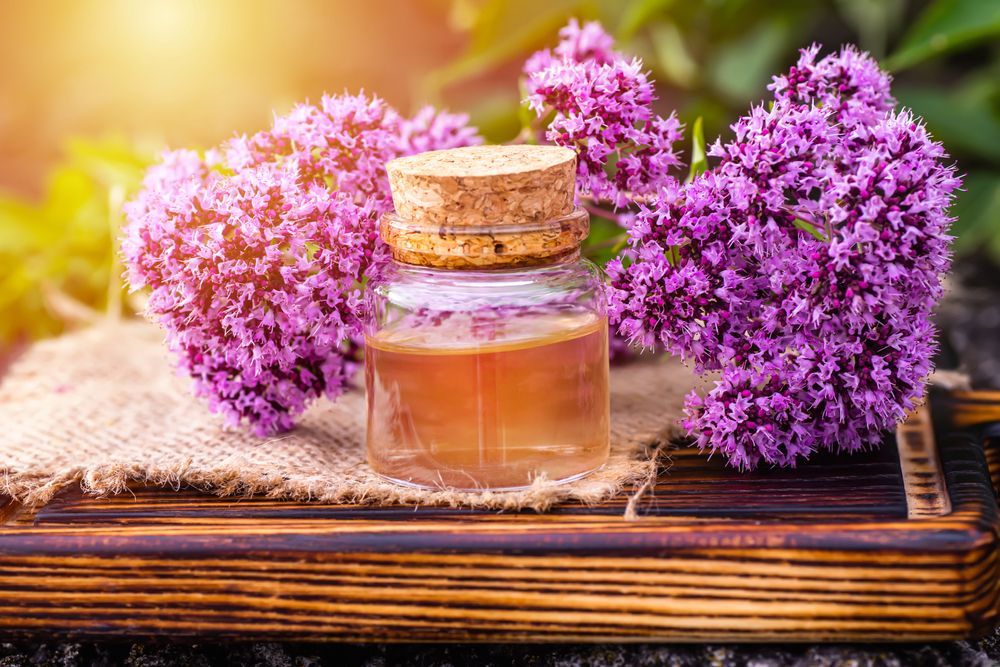
Extracted using steam distillation of the thyme flowering plant, the Deve Herbes Pure Essential Thyme Oil is a cruelty-free product. It is known for its antiseptic, tonic, stimulant and cardiac properties. The Deve Herbes Pure Essential Thyme Oil can be mixed with other carrier ingredients and applied to the scalp to treat hair conditions.
2.Alps Goodness Essential Oil – Ylang-Ylang
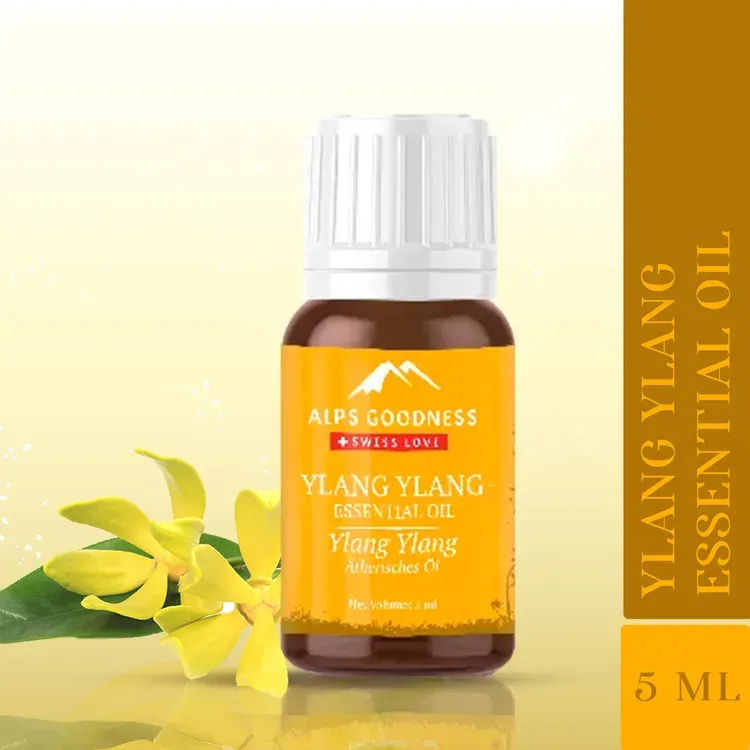
The Alps Goodness Essential Oil – Ylang-ylang can also be applied to the skin to promote skin firming and add radiance to the skin tone. It is proven to increase the thickness of the hair shaft and promote the growth of thicker hair. It is ideal for all skin and hair types and is also known to help with anger, tension, nervousness and insomnia.
3.Good Vibes Peppermint 100% Pure Essential Oil
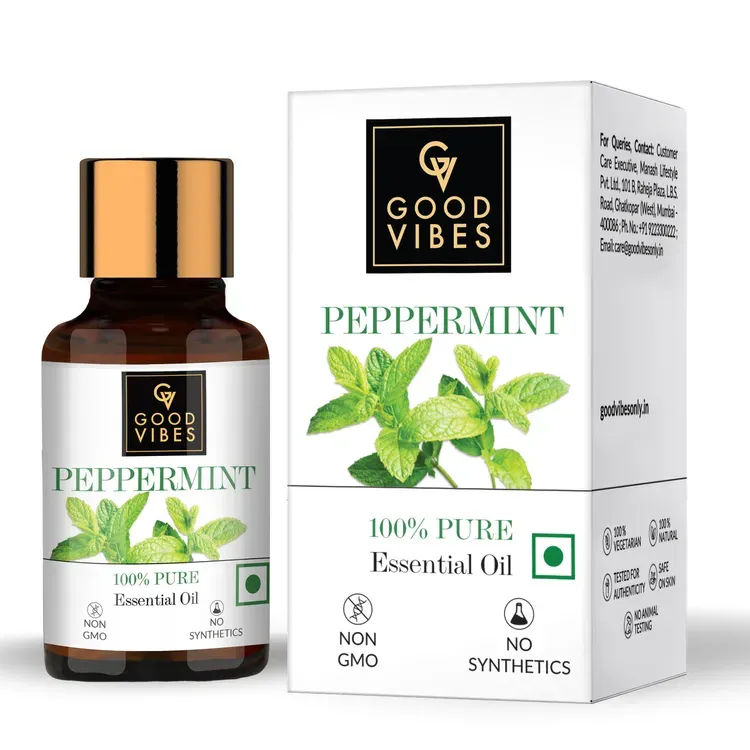
Due to its antibacterial, antifungal properties, it is known to keep hair bacteria-free. The Good Vibes Peppermint 100% Pure Essential Oil also aids the growth of new hair by stimulating the scalp. It is suitable for all hair and skin types and is also known to help relieve anxiety and boost the digestive system. Check out these Skincare tips.
Frequently Asked Questions
While using essential oils is generally safe, following the instructions mentioned on the product label can help. However, these product labels do not provide answers to all your queries. Therefore, below are some of the most frequently asked questions regarding the usage of essential oils and their answers.
1.How often should I use essential oils?
You should always use essential oils on your hair or skin on an as-required basis. Doing this prevents you from overdosing on essential oils and keeps your body from getting accustomed to them.
2.How much essential oil should I use?
Usage instructions for essential oil and the recommended dosage amounts are usually provided on the package. Therefore, following those limits is ideal. However, if you have been prescribed specific doses of the essential oils by doctors or experts, you must follow the dosage as prescribed.
3.How long can the essential oils be stored?
Generally, essential oils expire after 3 years if stored properly and kept in cool places. However, a few exceptions, like lemon oil and tea tree oil, go bad after 2 years, and patchouli oil which stays fresh for almost 10 years. They tend to oxidise over time; this oxidation is caused due to the presence of oxygen and moisture.
While some essential oils and their benefits on our hair and skin were discussed above, the medicinal and aromatic uses of essential oils are not limited. Therefore, we recommend you to visit our website purplle.com and choose from our extensive range of essential oils and other beauty, haircare and skincare products. You can also download our app from the Apple App Store or Google Play Store to get additional offers and discounts.
Read More:
- All About Sunflower Oil: Benefits for the Skin & How to Use It
- Skin Benefits of Jasmine oil
About Payal Bhattacharya
Payal is an editor at Purplle.com. She believes that the world will be a much better place if everyone owns a cat, it’s bizarre but true. She’s very sensitive and particular about her skincare routines and never skips it even for a single day. She loves to read about intimate hygiene and educate herself about female and male personal care which clearly reflects in her writings.
Latest Articles