
Feminine Hygiene
All You Need to Know About Periods & Menstrual Cycles (For Teens)
Sneha Singh
Do the words’ period’ or ‘menstruation’ make you worry or feel nervous? Well, that’s okay because it happens to all of us. It’s completely normal to feel anxious, and you can always discuss it with your friends or family.
As you slowly hit puberty, you begin to hear these terms, but you’re probably not aware of what they mean. We have come up with a comprehensive A-to-Z guide to menstruation to help you stay prepared for your periods, whether it’s your first or not.
What Are Periods or Menstruation?
Let’s get familiar with this term first. Your menstrual cycles or periods begin when you’re on the way to puberty. Approximately after 2 years of the development of your breasts, you might witness your first period.
It begins when a girl is 12 or 13 years old. Now what happens is that your vagina acts as a passageway for blood and tissues to exit your body, making you ready for another menstrual cycle.
Menstruation is brought on by fluctuations in the body’s hormones. The female hormones named estrogen and progesterone are released through the ovaries. The uterine lining thickens as a result of these changes in the hormones. The membrane is developed to the point where a fertilized egg may adhere and begin to build. The lining collapses and leaks when there is no fertilized egg. Then the entire process repeats itself every month.
When Does It Start? How Long Will a Period Stay?
You might experience your period symptoms in your early teens. The first period will stay for an average of 2-7 days. Menstruation follows a period cycle that varies for each individual. While some might have a 28-day cycle, others may experience a 24-day cycle.
Now you might ask, how many days does the average menstrual cycle last? The first few years, you might experience some irregularities, but it will start getting normal after a while, staying from 2-5 days.
What Are the Basics of a Period Survival Kit?
There are many period products to keep in your period survival kit. You can choose from high-quality tampons, sanitary pads such as the Carmesi Sensitive Sanitary Pads,
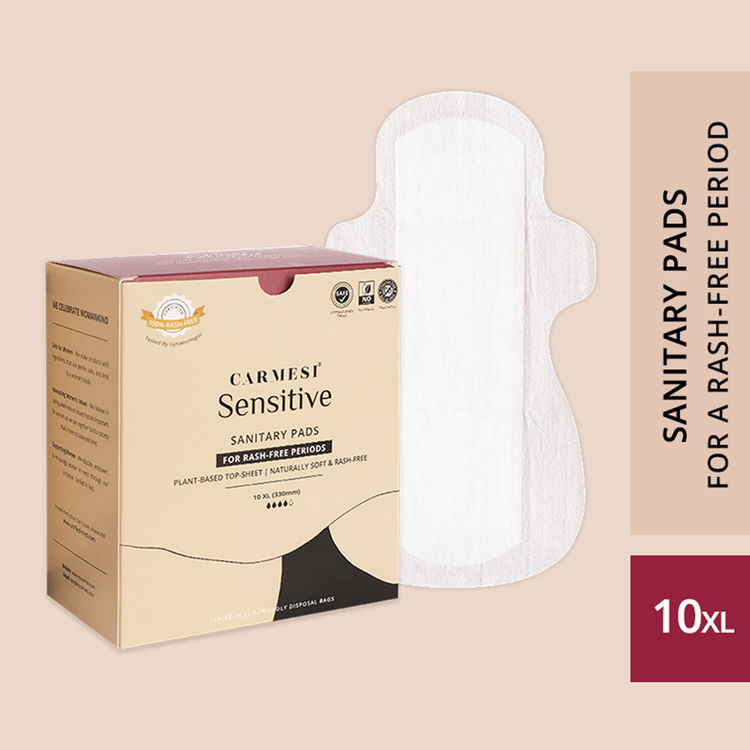
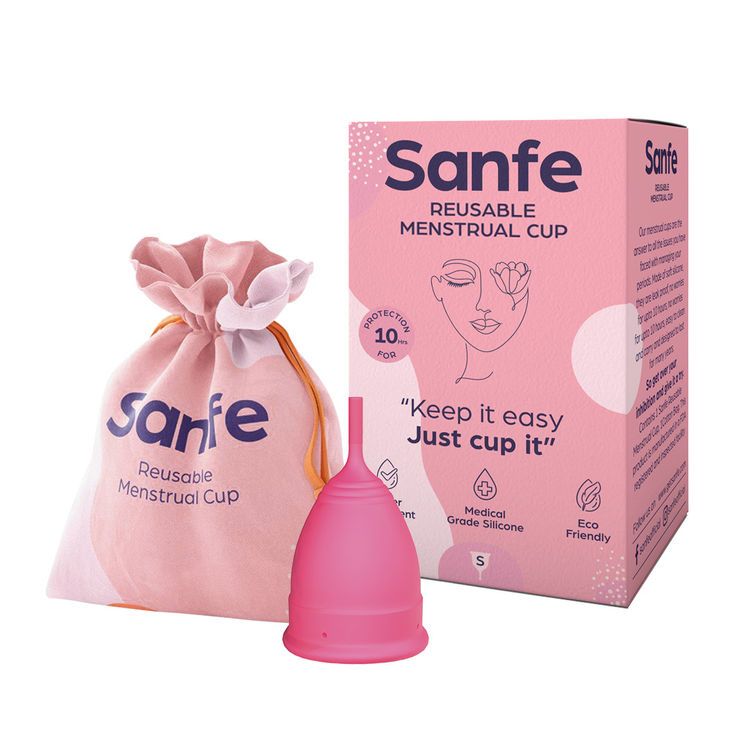
or menstrual cups like the Sanfe Reusable Silicon Menstrual Cups. While tampons or menstrual cups are inserted inside the vagina, pads are meant to be attached to your underpants.
Explore: Top Rated Sanfe Menstrual care
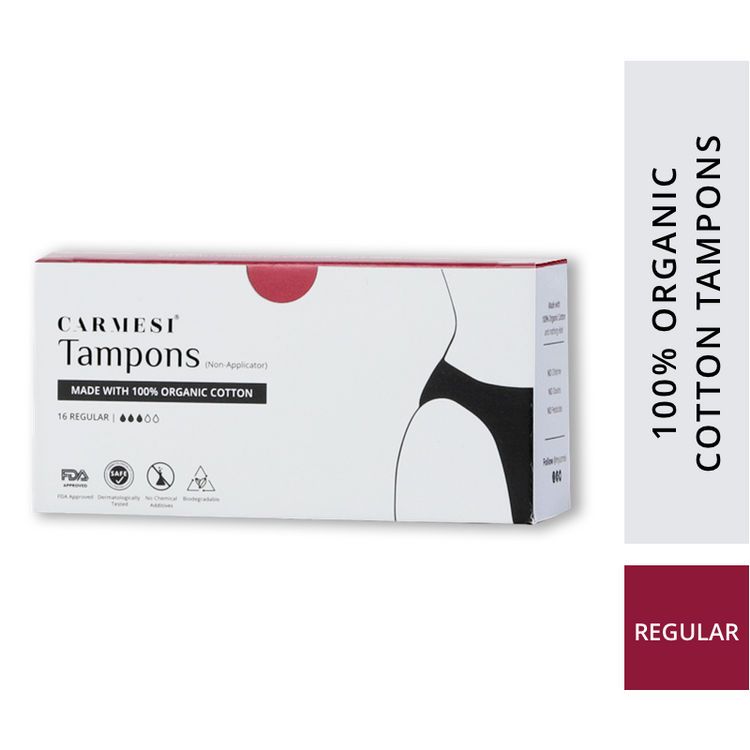
Tampons are placed on the inside of the vaginal canal and are available in different sizes (small to big) and absorbencies (for light to heavy bleeding days). To minimize leaks and infectious diseases, you should change a tampon every four to eight hours. The Carmesi 100% Organic Cotton Tampons are a great choice if you’re looking for some super-comfortable and organic tampons!
Explore: Genuine Menstrual care by Carmesi
Self-adhesive sanitary napkins are frequently used inside underpants. Pads are available for light days, heavy-flow, and nighttime use. To minimize the leaking of a pad and suppress the odor, you should switch the napkins every 4-6 hours.
As the name suggests, menstrual cups are cups made out of silicon. These are inserted inside your vagina to hold the discharge. The cup can be drained and rinsed to be prepared for subsequent use.
Pro Tip: Always load extra pads or tampons in your stock in case of any emergency. You can try each option and go for the one that works best to keep you comfortable during your period.
Will My Normal Schedule Be Affected?
A period is no barrier in the way of having fun. You can continue with your daily activities and exercises even during the menstruation days.
One secret tip: Exercising during your periods can help you relieve cramps or discomfort.
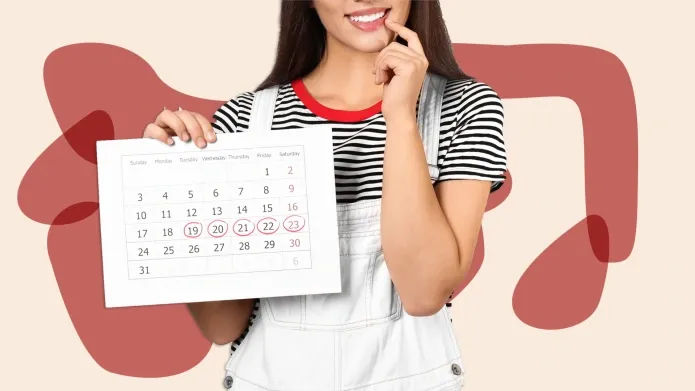
Keep track of the dates of your period to stay prepared. A few of us might experience mood swings, known as Premenstrual Syndrome (PMS), right before our period arrives. You might get frustrated quickly or be excessively sensitive during this time.
Though cramps or mood swings mostly accompany periods, these serve as the perfect chance to enjoy your favorite chocolates or food. Pamper yourself to cope with the pains or any mood swings during these days.
My Period Is Late! Do I Need to See a Gynecologists' Right Away?
If it’s your first time getting your period, don’t worry, your cycle may not be as regular yet. They might make their visit once and disappear for a few months for girls in their early teens. However, once the cycle is on track, you will get them regularly. Sometimes, you might miss your periods due to excessive stress or emotional situations, which is again normal.
However, if you see extreme irregularities in your cycle, you should consult your gynecologist about it, as it could be an indication of some underlying condition such as PCOs or thyroidism. Also, if the period stays for longer than usual or you experience excess bleeding, you should consult a doctor.
All Set to Grow!
Menstruation is the key to a healthy reproductive system. Periods are monthly visitors with a message that you’re doing completely fine while you’re growing into a gorgeous adult woman. There is no space for obstacles in your daily life with super convenient measures available like menstrual cups and pads. Instead, these are the days for self-pampering to keep yourself happy and comfortable. Looking for some fantastic menstrual care products online? Find them at great prices on Purplle.com! If you are wondering that if you use a menstrual cup, how would you clean it, then check out this do and dont's of cleaning menstrual cup.
FAQs
1. How much blood does my body lose in one menstrual cycle?
There’s no need to be frightened by the fact that blood comes out of your vagina during a period. On average, a girl loses only a few tablespoons of blood during this time.
2. When does a girl PMS?
Premenstrual syndromes happen right before it’s time for your periods. You may experience unusual moodiness, emotional behavior, anxiety, or acne. Once you get your period, these symptoms will be gone.
3. Will these periods keep coming for the rest of my life?
The answer is no. Once you reach your late 40s or early 50s, you’ll experience menopause, a stop mark for your periods.
4. How to stay away from cramps?
You can take painkillers or place a heating pad on the painful area. Exercising and yoga are also fun ways to say goodbye to menstrual cramps. or checkout The Best Solution for Menstrual Cramps.
Read more:
- Dos and don'ts you should follow during periods
- Ultimate Guide to Managing Periods When You Travel
- Easy Home Remedies to Regulate Your Periods
- 5 Reason for Late or Skipped Periods Beside being Pregnant
- Myths And Facts About Periods You Need To Know
About Sneha Singh
Sneha is a writer at Purplle.com. When she is not writing beauty stories, her mind weaves out supernatural and science fiction stories which she pens down in her diary. Sneha is an expert in Makeup, Health & Skin care and can advise you on all you need to know about keeping your body healthy with vitamins, minerals and a lot more. She is clearly a gym freak too and digs up on diet plans & cooks healthy food for her family & friends. Besides health, she also writes about baby and mothers’ care & her guides are very helpful for new parents. She likes to experience new adventures with one bite at a time.
Latest Articles