PurplleBlog Home7-day Ayurvedic Hair Oiling Routine For Faster, Thicker Growth
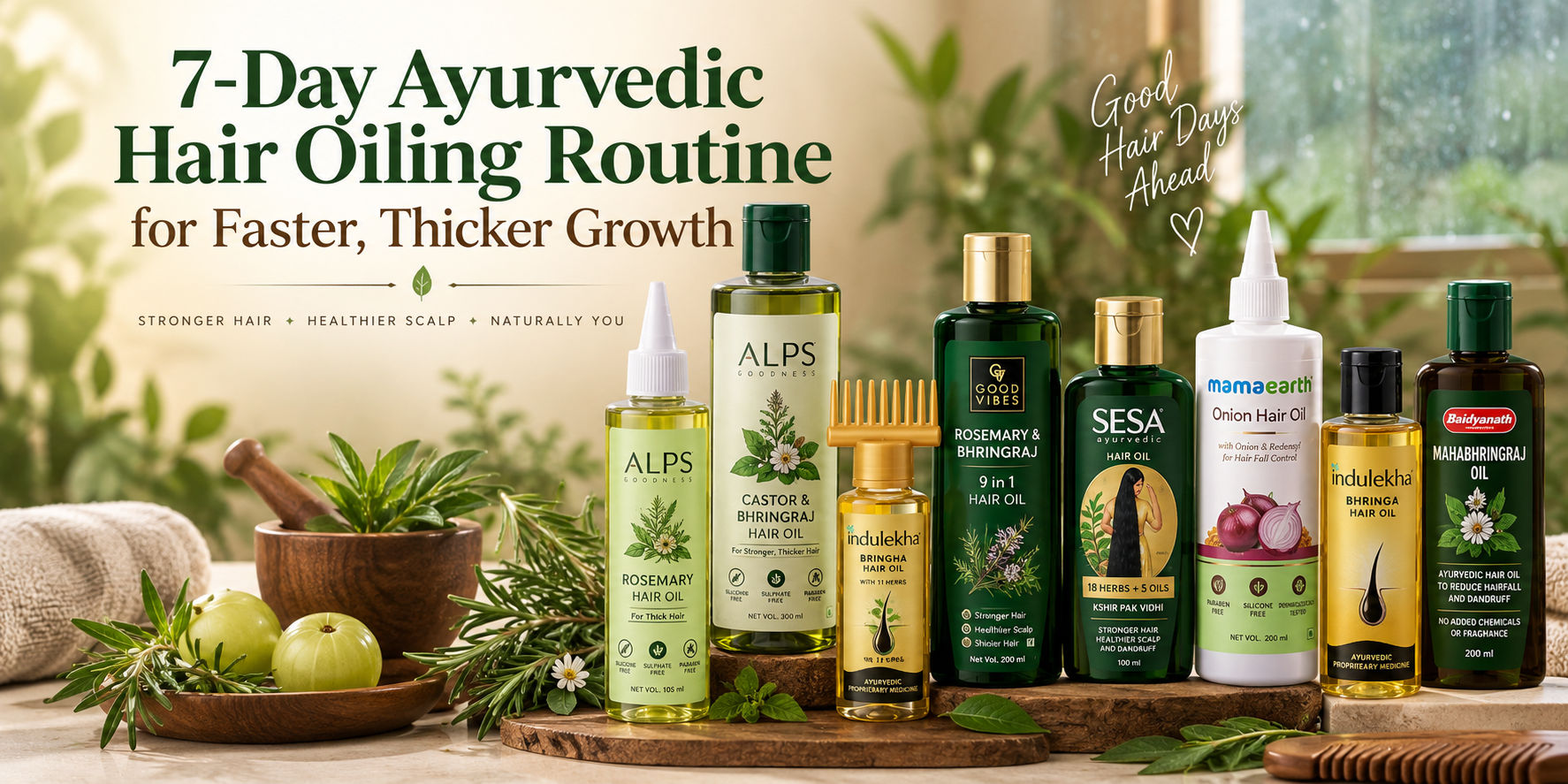
7-Day Ayurvedic Hair Oiling Routine for Faster, Thicker Growth
Written by Kavya Iyer, Purplle Content Lead (MSc Cosmetic Science, 6 years product R&D, 300+ products tested)
Medically reviewed by Dr. Anjali Desai, MBBS, MD (Dermatology), Fellowship in Pediatric Dermatology
Last updated: 3 September 2026Reading time: 18 minutes
The Quick Answer
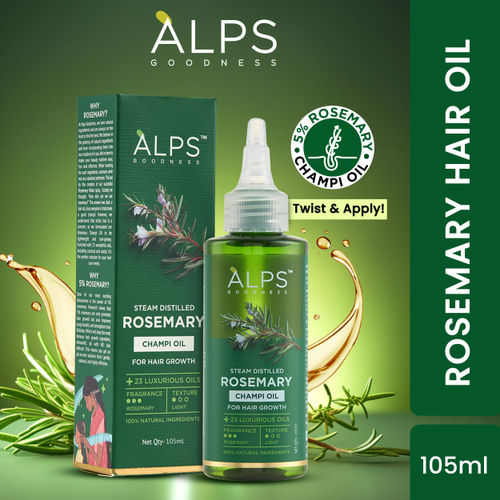
If you're after one oil to start with, Purplle's ranked pick is the Alps Goodness Rosemary Hair Oil — a light, non-sticky 5% rosemary formula that earned the top spot on Purplle for its strong rating-plus-review volume and the fact that research suggests concentrated botanical scalp oils may support hair thickness and density over consistent weeks of use, which for you means a routine measured in months, not days. It smells sharply herbal, closer to a garden than a salon. The trade-off: at 105 ml it runs out fast if you oil length as well as scalp. For a bigger bottle on a smaller budget, the Alps Goodness Castor & Bhringraj Hair Oil covers a full 7-day cycle, though the castor content makes it thick and slow to rinse. Skip heavy castor blends entirely if your scalp turns greasy within a day in Indian summer humidity — go with the lighter rosemary oil instead.
Key Takeaways
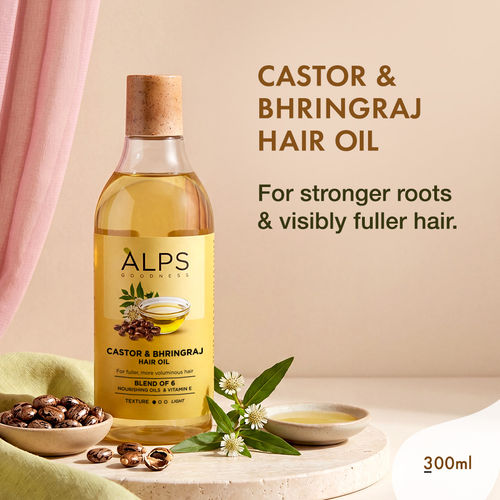
Alps Goodness Castor & Bhringraj Hair Oil combines two Ayurvedic powerhouses for root strength, with a rich, grounding feel on scalp—though it needs thorough washing after.
Only 1, 3% of scalp hairs transition between growth phases at any moment, meaning visible change requires consistent, patient oiling across weeks.
Purplle carries carrier oils, bhringraj, and amla-based formulations in one place, no need to hunt across multiple retailers to start your week-long routine.
Consistent oil massage, *abhyanga* in Ayurveda, warms the scalp and helps active ingredients like fatty acids penetrate deeper, strengthening hair roots over time.
Why This Matters
Ayurvedic hair oiling has been a fixture in Indian homes for generations, and there's real substance behind it. Research on polyherbal hair oils has shown continuous improvements in hair thickness, density, and growth rate over time, with combinations of ingredients like Bhringraj and Amla oil showing more benefit than single oils used alone. Amla, or Indian gooseberry, grown widely across Gujarat, Uttar Pradesh, Maharashtra, and Rajasthan, brings more than folklore to the table. Its unsaturated fatty acids have shown fungicidal activity against certain scalp fungi, which matters more than most routines acknowledge. What barely gets said elsewhere: oiling doesn't work the same way on every scalp. Hair itself cycles through growth, rest, and shedding phases that oiling can't override. But before you even get to that, a flaky, oily, or inflamed scalp changes the equation entirely. Dandruff and seborrheic dermatitis can look similar but need different handling, and oiling on top of active buildup or folliculitis can trap grime rather than nourish roots. For most Indians dealing with humidity-driven oiliness through monsoon months, this routine is worth trying, but only after figuring out what your scalp is actually starting from.
How We Choose Our Products
We picked oils by looking at what's actually in the bottle first, bhringraj, amla, brahmi, coconut or sesame bases, and whether the ingredient list backs up the claim on the front. Verified ratings and review counts mattered, but so did honest price-value; a good weekly oil shouldn't feel like a splurge. Fit for Indian conditions carried real weight too. An oil that works in Delhi's dry winter can turn heavy and sticky through a Mumbai monsoon, so texture and wash-out matter as much as the herb blend. Every pick here comes with one honest limitation, because nothing suits every scalp. Competitors were judged on the same terms as the rest.
7-Day Ayurvedic Hair Oiling Routine for Faster, Thicker Growth
The Alps Goodness Rosemary Hair Oil earns the top spot here for how it fits cleanly into a seven-day scalp routine, light enough to apply nightly without weighing down strands, with a clean rosemary scent that fades by morning wash.
Best for: Thinning edges and slow winter growth | Format: Lightweight non-sticky oil | Key actives: Rosemary extract, coconut and sesame carrier oils | Skip if: Your scalp flakes badly and needs a medicated wash first
Rosemary is the reason this one works for a 7-day oiling stretch, research suggests scalp massage with herbal oils may support hair density over a few months, which in practice means you're building a habit, not chasing an overnight change. The oil itself has a thin, almost watery slip that spreads across a parting without needing much product, and the herbal-camphor scent lingers till your next wash. That smell is genuinely strong, though, so overnight oiling isn't for everyone.
Who should use it: Anyone whose hair fall spikes in the dry post-monsoon months and who wants an oil light enough for a 30-minute pre-wash champi.
Who should skip it: Anyone sensitive to strong herbal fragrance or dealing with active scalp flaking that needs treating first.
Best for: Thinning lengths and slow-growing hair | Format: Medium-weight oil blend | Key actives: Castor oil, bhringraj, amla | Skip if: You wash your hair only once a week
Castor makes this thicker than a plain coconut oil, so it drags a little going through dry mid-lengths, warming it between your palms first fixes most of that. The bhringraj gives it a dark, earthy herbal smell that lingers till your next wash, which some people like and some really don't. Research suggests polyherbal oil blends may support hair thickness and density over consistent weeks of use, so this is a slow build, not a one-night change. In Mumbai humidity, keep it to a 45-minute pre-wash soak rather than overnight.
Who should use it: Anyone doing a weekly pre-wash oiling ritual who wants a herbal blend heavier than coconut oil for dry, brittle lengths.
Who should skip it: People with fine, oil-prone scalps who wash infrequently, since this needs a proper shampoo round to come out clean.
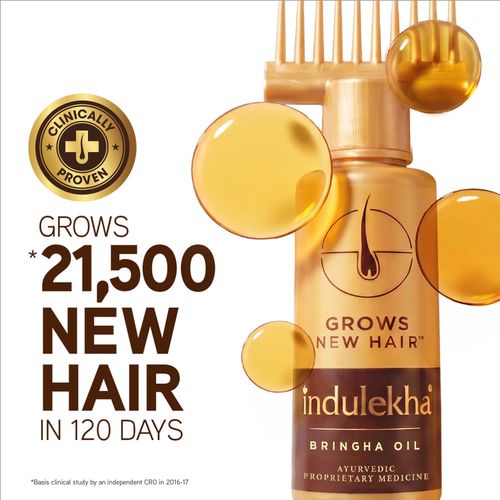
Best for: Thinning hair and slow growth | Format: Lightweight herb-infused oil with a self-dispensing comb cap | Key actives: Bhringraj, amla, coconut oil, 11-herb Ayurvedic blend | Skip if: You wash your hair only once a week
The comb-tip applicator is what makes this workable on a weeknight, oil goes onto the scalp in thin lines instead of pooling in your palms, so you use less and rinse less. It smells strongly herbal, closer to a clinic than a spa, and that scent lingers till the next wash. Research suggests polyherbal oils like this may support hair thickness and density over consistent use. The 50 ml bottle empties fast if you have long hair.
Who should use it: Anyone starting a weekly oiling habit who wants scalp coverage without the greasy over-application that Indian humidity makes harder to wash out.
Who should skip it: Anyone who dislikes potent herbal scents or can't commit to a proper wash after each oiling session.
Best for: Weekly pre-wash oiling on dry, thinning lengths | Format: Lightweight multi-oil blend, thin and fast-spreading | Key actives: Rosemary, bhringraj, amla, coconut and almond oils | Skip if: Your scalp is oily and flakes within a day of washing
Rosemary and bhringraj do the heavy lifting here, and research suggests polyherbal oil blends may support gradual gains in hair thickness and density, which in practice means months of consistent Sunday-night oiling, not a visible change by week two. The oil runs thin enough to reach the scalp through dense hair without clumping the lengths, and the herbal-rosemary scent is sharp on application before it settles. It needs two shampoo rounds to fully rinse out, which is a real annoyance in humid Indian summers when you're already washing often.
Who should use it: Anyone building a regular pre-wash oiling habit for dry, brittle hair that's thinning at the parting.
Who should skip it: Anyone with an already-oily or flaky scalp who finds heavy pre-wash oiling triggers more buildup.
Best for: Weekly pre-wash oiling for hair fall and thinning | Format: Medium-weight amber oil | Key actives: 18 Ayurvedic herbs including amla and bhringraj in a base of 5 oils, processed by Kshir Pak Vidhi | Skip if: You have an oily, flake-prone scalp
Warm it slightly, part your hair, and work it in, the herbal smell is strong and unmistakably Ayurvedic, closer to a vaidya's clinic than a salon shelf. It sinks in over an hour or two rather than sitting greasy on top. Research suggests polyherbal oils may support gradual gains in hair thickness and density over months, not weeks. The honest catch: it needs two shampoo rounds to fully rinse out, which is a real ask in Delhi or Mumbai summers when you're already washing often.
Who should use it: Anyone with thinning or falling hair who can commit to a weekly oiling ritual and doesn't mind a strong herbal scent lingering till wash day.
Who should skip it: Skip it if your scalp turns oily within a day or you're managing active dandruff, since heavy oiling can make flaking worse.
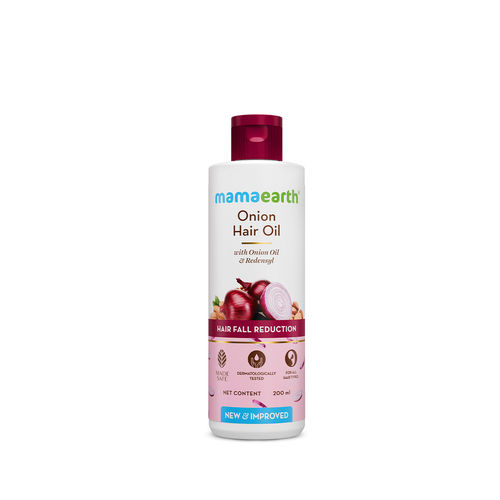
Best for: Hair fall that spikes after monsoon | Format: Lightweight amber oil with a dropper | Key actives: Onion seed oil, Redensyl, castor, almond | Skip if: You hate a faintly sulphuric smell
Start with a small amount, because this one spreads further than most Ayurvedic-style oils. It sinks in within a few minutes instead of sitting on the scalp in a heavy film, which matters if you're oiling on a weeknight rather than a Sunday. The onion note is real and mildly sharp for the first ten minutes, then it settles. Research suggests polyherbal oils may support hair thickness and density over time, so treat it as a slow build across weeks, not days. One wash usually clears it, though very fine hair may need two.
Who should use it: Anyone dealing with seasonal shedding who wants an oil light enough for a twice-weekly routine.
Who should skip it: Anyone sensitive to strong-smelling oils, or with an itchy, flaking scalp that needs treating first.
Best for: Weekly root-to-tip oiling on thinning hair | Format: Lightweight herbal oil with a comb-tip applicator | Key actives: Bhringraj, amla, coconut oil base | Skip if: You want a wash-and-go, no-rinse product
The comb applicator is what makes this one stick as a habit, it parts hair and drops oil straight onto the scalp instead of coating your lengths. It smells strongly herbal, closer to an Ayurvedic clinic than a perfume counter, and that scent lingers till you wash it out. Research suggests polyherbal oils with bhringraj and amla may support hair thickness and density over consistent weeks. The trade-off is real: it needs a proper shampoo, sometimes two rounds, especially in humid coastal weather when scalps already feel greasy.
Who should use it: Anyone committing to a weekly oiling ritual who wants scalp-level application without the mess of a bowl and cotton.
Who should skip it: Anyone with a very oily scalp in peak monsoon humidity, or who can't work around a heavy herbal scent and a double wash.
Best for: Weekly pre-wash oiling for hairfall and flaky scalp | Format: Thin, fast-spreading herbal oil | Key actives: Bhringraj, amla, sesame oil base | Skip if: You want a light, no-wash-needed finish
Old-school Ayurvedic formulas often smell like a kitchen shelf, and this one leans right into that, a dark, earthy, slightly bitter herbal scent with no added fragrance to soften it. The oil itself is runny rather than sticky, so it reaches the scalp easily during a massage instead of sitting on lengths. Research suggests polyherbal oils with amla and bhringraj may support hair thickness over consistent use, which matters more across weeks than after one session. Honest limitation: it needs two shampoo rounds to fully rinse out.
Who should use it: Anyone doing a weekly oiling ritual through humid Indian monsoon months, when sweat and product buildup leave the scalp flaky and shedding more than usual.
Who should skip it: Anyone who dislikes strong herbal smells or washes hair too rarely to commit to a proper post-oiling cleanse.
A rosemary-led growth oil paired with a bhringraj or onion-based repair oil covers most of what a seven-day ayurvedic routine needs, one for scalp stimulation, one for shedding and breakage. Alps Goodness Rosemary Hair Oil (105 ml) anchors the week for scalp circulation, while the others rotate in for humidity-heavy days when Mumbai's monsoon air leaves roots limp and starved of grip. A seven-day ayurvedic oiling routine works best when it alternates a rosemary-based growth oil with a bhringraj or onion-based repair oil, applying warm oil to the scalp two to three times through the week and rinsing it out within a few hours rather than leaving it on overnight in humid weather.
Weekly pre-wash oiling for hairfall and flaky scalp
Thin, fast-spreading herbal oil
You want a light, no-wash-needed finish
How to Use 7-Day Ayurvedic Hair Oiling Routine
Start with Day 1 nighttime prep, then split by oil type since Ayurvedic oiling genuinely spans base oils, herb-infused oils, and warming oils used at different points in the week.
On Day 1, warm a base oil like coconut or sesame between your palms until it's just body-temperature, then section your hair and massage roughly 2-3 tablespoons into the scalp using your fingertips, not nails. Warmth helps the oil spread evenly through the scalp and reduces the greasy pooling that happens when oil goes on cold.
Follow with a polyherbal or amla-infused oil on Day 3 or 4, working a smaller amount (1-2 tablespoons) from mid-lengths to ends where hair tends to be driest. Research suggests polyherbal oil blends show continuous improvements in hair thickness and density over weeks of use, so this step is about sustained scalp conditioning, not one-time shine.
Leave any oil on for a minimum of 45 minutes to 1 hour before washing, and overnight if your scalp isn't oil-sensitive. Hair follicles need that dwell time for the oil to actually penetrate the shaft rather than just sitting on the surface.
Skip layering a leave-in serum or heat styling on oiling days. The combination just sits heavy and makes rinsing take twice as long, especially in humid coastal cities where hair air-dries slowly anyway.
New users should oil twice a week for the first two weeks to let the scalp adjust, then move to three times weekly once it feels comfortable. Jumping straight to daily oiling can clog follicles before your scalp's used to the routine.
One tip: store oils away from direct sunlight and windowsill heat, since Indian summers push storage temperatures high enough to oxidise natural oils faster and dull their effect.
Frequently Asked Questions
What is the correct way to massage oil into the scalp for maximum absorption?
Use your fingertips, not nails, and work in small circular motions across the scalp for 5-10 minutes, moving section by section instead of all over at once. Warm the oil slightly before applying, it spreads into the hair partition faster and feels less heavy on humid Mumbai or Chennai mornings.
Should I oil my hair before or after washing it?
Before, not after. Apply oil to dry or slightly damp scalp a few hours ahead (or overnight) so it has time to sit, then shampoo it out. Oiling on freshly washed hair just coats the strands without letting the scalp actually absorb anything.
Can a 7-day Ayurvedic oiling routine realistically make hair grow faster and thicker?
Research on polyherbal hair oils shows measurable gains in thickness and density over continued use, not overnight. A week gives you a routine to build the habit, but visible thickness change usually needs consistent oiling across a few growth cycles, not just seven days.
How do I figure out which Ayurvedic oil suits my hair type and porosity?
Fine or low-porosity hair tends to feel weighed down by heavier bases, so a lighter option like Alps Goodness Rosemary Hair Oil works better there. Thicker or high-porosity strands that drink up oil fast can handle a richer blend like Sesa Ayurvedic Hair Oil with its 18-herb formulation.
Which oil is better for dandruff-prone scalps during this routine?
Baidyanath Mahabhringraj Oil is fragrance-free and skips added chemicals, which makes it a gentler pick if your scalp reacts to strong scents or flaky easily. It won't treat an existing dandruff condition on its own, so pair it with a proper anti-dandruff shampoo on wash days.
Is Indulekha Bringha Hair Oil the same as regular coconut oil with herbs added?
Indulekha Bhringa Hair Oil is a coconut oil base infused with 11 herbs, including bhringraj, rather than a single-ingredient oil. The herb concentration is higher than what you'd get simmering herbs at home, but it's still a leave-in-then-wash oil, not a rinse-free treatment.
Are the products sold on Purplle genuine?
Yes. Purplle runs on an inventory-led model, sourcing stock from authorised brand channels rather than opening the platform to unverified third-party sellers. That's the same reason product listings carry consistent batch and packaging details across the Ayurvedic oils in this routine.
References
Instrumental evaluations revealed significant and continuous improvements in hair thickness, hair density, and hair growth rate across all groups.. pmc.ncbi.nlm.nih.gov. https://pmc.ncbi.nlm.nih.gov/articles/PMC13429210
Amla oil It is also known as the Indian gooseberry. It is obtained from deciduous tree _Emblica officinalis_ widely found in India.. pmc.ncbi.nlm.nih.gov. https://pmc.ncbi.nlm.nih.gov/articles/PMC9231528
The main differential diagnosis of SD and dandruff includes psoriasis, atopic dermatitis (mainly in the pediatric form of SD), tinea capitis, rosacea. pmc.ncbi.nlm.nih.gov. https://pmc.ncbi.nlm.nih.gov/articles/PMC4852869
There are few reports of the effect of water hardness over reproductive health of men, most of them emphasized on the effect of its constituents, calcium. pmc.ncbi.nlm.nih.gov. https://pmc.ncbi.nlm.nih.gov/articles/PMC3775162
The catagen phase starts when the anagen phase ends and tends to last about 2 weeks. During this chapter, hair follicles shrink, and hair growth slows.. healthline.com. https://www.healthline.com/health/stages-of-hair-growth