PurplleBlog HomeBest Sunscreens For Dry Skin: Top 9 Picks Of 2026
Best Sunscreens for Dry Skin: Top 9 Picks of 2026
Written by Ananya Rao, Purplle Beauty Editor (5 years in skincare journalism,
400+ products tested)
Medically reviewed by Dr. Rohit Menon, MBBS, MD (Dermatology), DDVL
Last updated: 28 July 2026Reading time: 19 minutes
Key Takeaways
Good Vibes Vitamin C Sunscreen combines SPF 50 broad-spectrum protection with hyaluronic acid, making it
hydrating for dry skin without the white cast.
Most people apply only 25–50% of the recommended amount; you'll need about 1 ounce to protect exposed skin
on your face and body.
Both Good Vibes formulas available on Purplle have PA++++ and broad-spectrum protection — the UVA/UVB
combination research suggests is key to preventing photoaging.
Chemical sunscreens like these vitamin C and watermelon picks absorb UV rays and convert them to heat,
making them gentler on sensitive, dry skin than mineral filters.
The Quick Answer
If your skin gets tight and flaky by mid-morning, the sunscreen you're using is probably doing half the job.
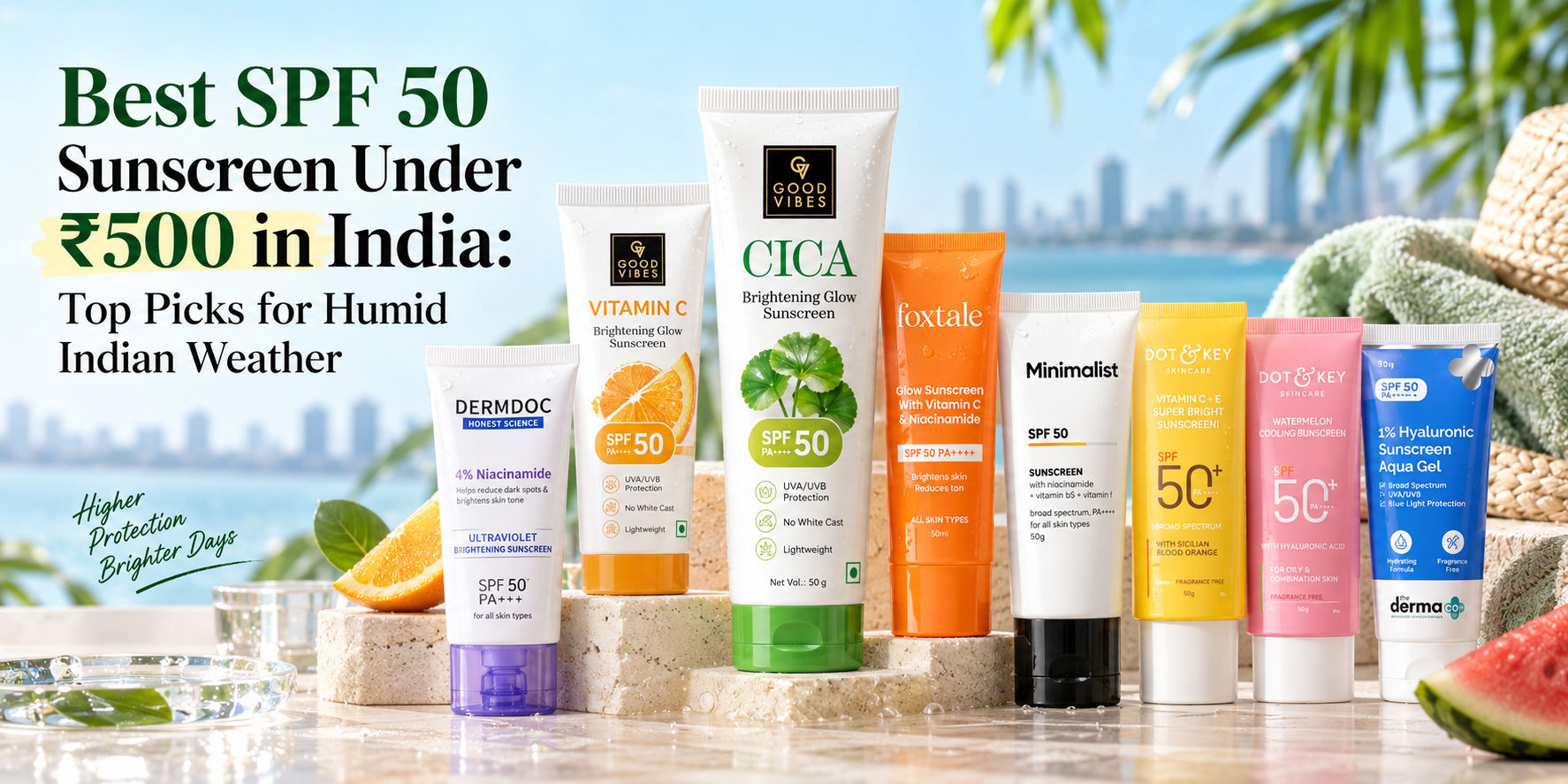
Purplle's dry-skin sunscreen range covers this well, and the pick that stands out most is the Good Vibes
Vitamin C SPF 50 PA++++ Sunscreen — 3% niacinamide with hyaluronic acid means it holds water in the skin while
it blocks UV, so you're not reaching for a separate moisturiser two hours later. It sinks in with a slightly
dewy finish and no white cast, though the citrusy scent is noticeable if you're sensitive to fragrance. On a
smaller budget, the Good Vibes Hydrating Watermelon Sunscreen SPF 50 PA++++ does
similar hydrating work with a lighter, more watery texture. Skip both if you want a true matte finish, these
lean glowy, which reads as shine in Mumbai humidity.
One thing worth fixing regardless of which bottle you buy: research suggests most people apply only a quarter
to half of what's needed, so a full teaspoon for the face is the difference between the SPF on the label and
far less protection on your skin.
Why This Matters
Dry skin in India faces a specific bind: many affordable sunscreens skew matte or gel-based for the country's
heat and humidity, and those formulas can leave already-tight, flaky skin feeling more parched by afternoon.
That trade-off matters because under-protection is common regardless of skin type, most people apply only a
quarter to half of the sunscreen a face actually needs, and dermatology guidance points to roughly a teaspoon,
about the length of two fingers, as the real amount for full-face coverage. For brown and melanin-rich skin,
broad spectrum protection carries extra weight: research suggests broad spectrum formulas that combine UVA and
UVB filters with iron oxide perform better against melasma than UV filters alone, which matters given how common
post-inflammatory hyperpigmentation (PIH) and melasma are in Indian skin. That's the real case for a broad
spectrum, SPF 30+ sunscreen even on overcast monsoon days or through winter's lower UV index, since protection
lapses are usually about quantity and consistency, not the product alone. For dry skin, the picks ahead try to
hold that same broad spectrum, adequate-SPF baseline while using textures and hydrating bases built to survive
Indian humidity swings without pilling or stripping moisture.
How We Choose Our Products
Sunscreen for dry skin is a narrow brief, so the filter started with formula: hydrating bases like glycerin,
hyaluronic acid, ceramides or squalane paired with broad-spectrum protection, and textures that don't leave that
tight, powdery finish after an hour. Verified ratings and review counts on Purplle came next, then what you
actually get for the money across affordable and premium options. Indian conditions mattered too, a sunscreen
that behaves in Delhi's dry winter air can turn heavy through a Mumbai August, so we looked at how each one
holds up in real humidity swings. Every pick lists one honest drawback, because no formula suits everyone.
Competing brands were judged on the same terms, not on who owns the shelf.
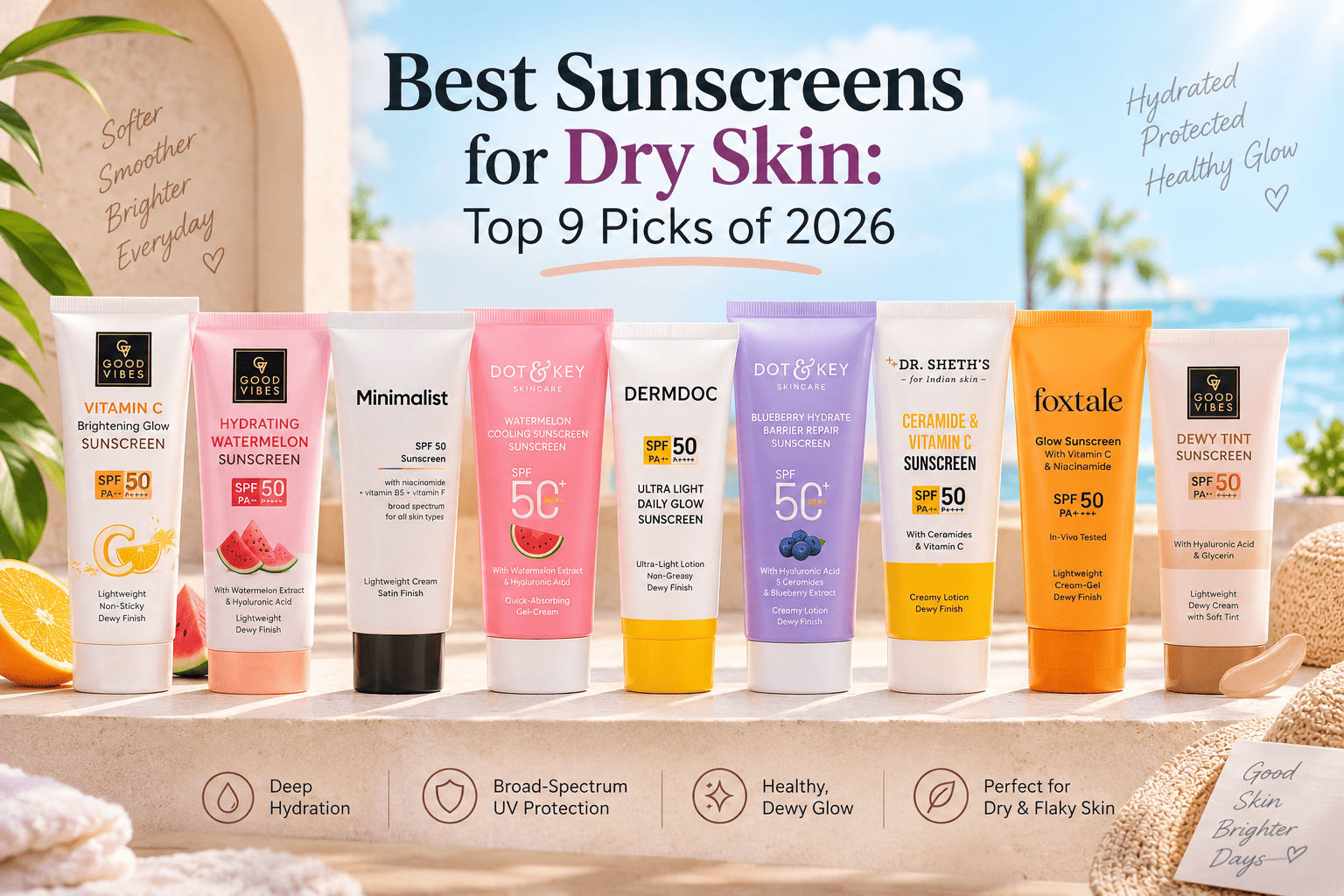
Best Sunscreens for Dry Skin: Top 9 Picks of 2026
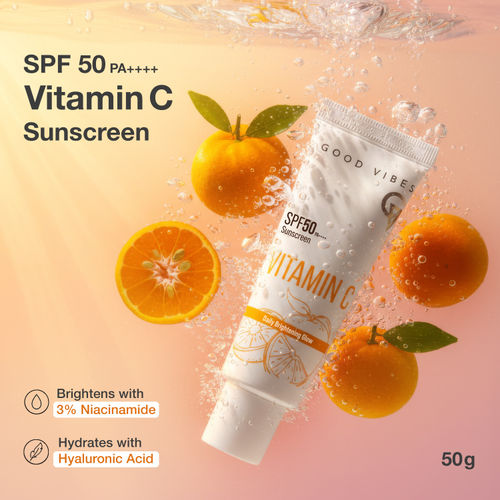
Good Vibes Vitamin C SPF 50 PA++++ Sunscreen earns the top spot here for pairing a lightweight, non-sticky
gel-like finish with 3% niacinamide and hyaluronic acid, so dry skin gets sun protection without that tight,
flaky feel by midday, no white cast left behind even on deeper, melanin-rich skin tones.
Best for: Dry skin that wants brightening alongside daily SPF |
Format: Lightweight cream that melts into a soft, non-powdery finish | Key
actives: Vitamin C, SPF 50 PA++++ broad-spectrum filters | Skip if: You want a
mattifying finish under heavy makeup
Rubs in without that chalky drag most SPF 50 formulas leave on dry patches, and the
citrus-adjacent scent fades within a minute or two. The finish sits slightly dewy, which reads as healthy in
Delhi winter but can feel like a lot during a humid Mumbai July. PA++++ signals strong UVA defence, and
research suggests broad-spectrum UVA coverage matters most for the pigmentation and melasma that brown skin
tones are prone to, meaning fewer stubborn dark patches to treat later. Honest catch: you need a proper
two-finger-length dose on the face for the SPF 50 to actually hold up, and the tube runs down faster than
people expect.
Who should use it: Anyone with dry or normal skin who wants sun protection
and gradual brightening in one step, without layering a separate vitamin C serum.
Who should skip it: Very oily or acne-prone skin, or anyone who needs a
flat matte base for long office days.
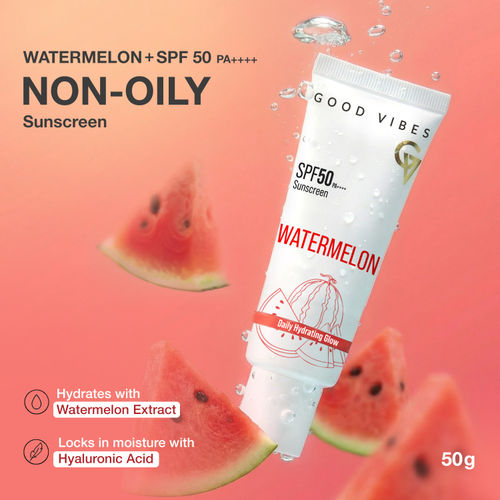
Best for: Dry, tight skin that hates a matte finish |
Format: Lightweight hydrating cream, dewy finish | Key actives: Watermelon
extract, hyaluronic acid, SPF 50 PA++++ broad-spectrum filters | Skip if: You want a matte,
oil-free feel
Watermelon fruit extract and hyaluronic acid do the heavy lifting here, hyaluronic acid
pulls water toward the skin's surface, which is why dry skin doesn't get that papery tightness by mid-morning.
It sinks in with a slightly slippery, moist glide before settling into a soft dewiness, and the melon scent is
gentle rather than syrupy. The honest catch: that same dewiness can read as shine on humid Mumbai afternoons,
and the ~SPF 50 protection only holds if you're using a full two fingertip units on face and neck.
Who should use it: Anyone with dry or dehydrated skin who's been skipping
sunscreen because most formulas feel chalky or drying by noon.
Who should skip it: Oily and acne-prone skin, or anyone who needs a
genuinely matte base under makeup in peak summer.
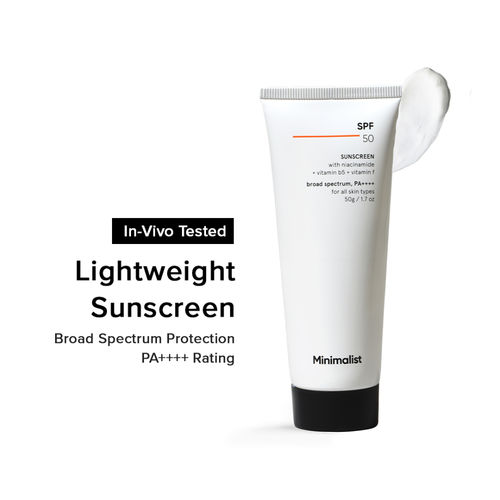
Best for: Dry skin that flakes under sun protection |
Format: Lightweight cream, satin finish | Key actives: Niacinamide, vitamin
B5, vitamin F | Skip if: You want a fully matte, powdery finish
Dry skin usually punishes thin, alcohol-heavy sunscreens, and this one goes the other
way. It spreads like a light moisturiser and settles into a soft satin that doesn't feel tight by afternoon,
even in dry North Indian winters when heating and cold wind strip skin fast. Niacinamide helps skin hold onto
moisture, so you're less likely to see midday flaking around the nose. The trade-off is real shine on oilier
days.
Who should use it: Anyone whose skin feels tight or flaky within an hour
of applying regular sunscreen.
Who should skip it: People with combination or oily skin who need a matte
finish under makeup.
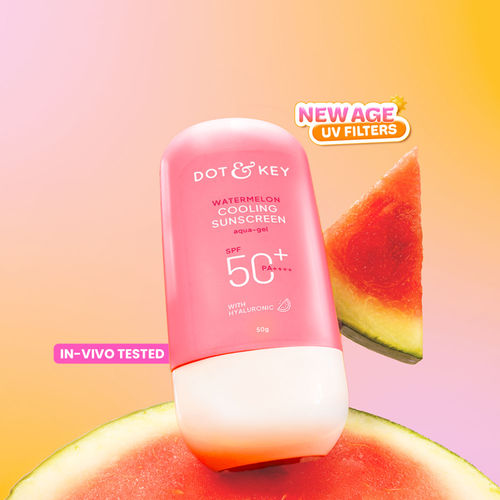
Best for: Dry, dehydrated skin that needs hydration with sun
protection | Format: Lightweight, quick-absorbing gel-cream | Key actives:
SPF 50+ PA++++, watermelon extract, hyaluronic acid | Skip if: You want a matte, powdery
finish
This one leans hydrating rather than drying, which is what dry skin usually wants from a
sunscreen. It goes on with a cool, slightly wet feel that sinks in within a minute or so, and it doesn't leave
the tight, papery pull that some high-SPF formulas do. No white cast worth mentioning. The limitation is
honest: it's built with oily skin in mind too, so through a dry Delhi winter you may need a moisturiser
underneath rather than relying on this alone. Research suggests most people under-apply, roughly a teaspoon
for the face is the actual target.
Who should use it: Anyone with dry or dehydrated skin who wants high
broad-spectrum protection without a heavy, occlusive layer.
Who should skip it: Anyone whose skin runs very dry year-round and
prefers a rich cream-textured sunscreen that does the moisturising work on its own.
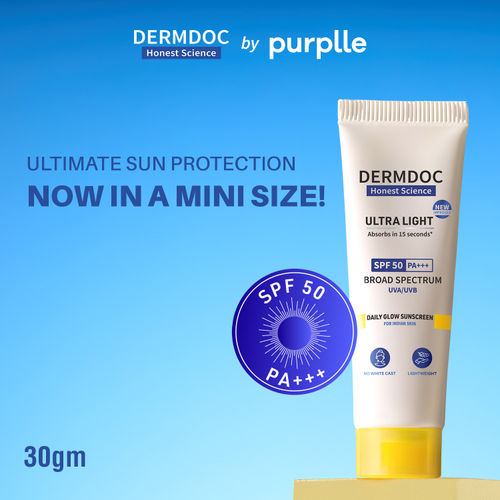
Best for: Dry, tight skin that needs daily protection |
Format: Ultra-light lotion, non-greasy dewy finish | Key actives: SPF 50
PA+++ broad-spectrum filters, hydrating glow complex | Skip if: You want a fully matte finish
under heavy makeup
Spread this out and it disappears faster than most SPF 50s, no white cast lingering
along the jaw, no waiting five minutes before you can touch your face. The dewy finish reads as healthy on dry
skin that flakes in air-conditioned offices, though that same glow can tip into shine by afternoon in Mumbai's
humidity. Research suggests most people apply only a quarter to half the sunscreen needed, so use about a
teaspoon on your face and neck, that's where the protection actually comes from.
Who should use it: Dry or normal skin that goes tight and papery by
mid-morning and wants sun protection without a heavy, occlusive layer.
Who should skip it: Oily or acne-prone skin that already fights midday
shine, or anyone who needs a flat matte base under full-coverage makeup.
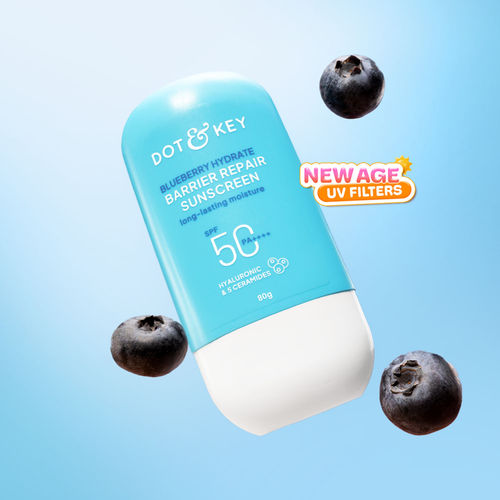
Best for: Dry, tight, flaky skin that hates chalky sunscreen |
Format: Creamy lotion with a soft dewy finish | Key actives: SPF 50+ PA++++
with 6 UV filters, hyaluronic acid, 5 ceramides, blueberry extract | Skip if: You want a
matte finish under makeup
Sunscreen and dry skin have a long history of not getting along, and this one takes the
moisturiser route instead. It spreads like a light cream, sinks in without that squeaky drag, and leaves skin
looking slightly glossy rather than powdery. The ceramides and hyaluronic acid do real work, research suggests
both support the skin's moisture barrier, so you're not fighting flakes by noon. That dewy finish turns shiny
fast in Mumbai humidity, though, so oily patches may need blotting.
Who should use it: Anyone whose skin feels tight and papery after
cleansing, especially through dry North Indian winters when flaking peaks.
Who should skip it: Combination or oily skin looking for a dry-touch,
matte base under foundation.
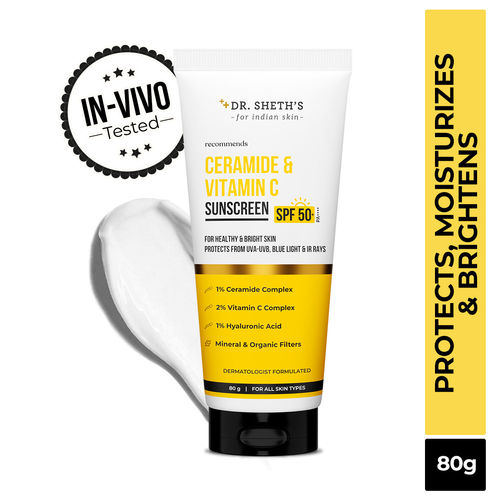
Best for: dry, tight skin that flakes by afternoon |
Format: creamy lotion, dewy finish | Key actives: ceramides, vitamin C, SPF
50+ PA++++ | Skip if: you want a matte, powdery finish
Ceramides here do the quiet work, they help the skin barrier hold on to water, which
matters when dry skin is already losing it faster than it can replace it. It spreads like a light face cream,
sinks in without that squeaky drag thinner sunscreens leave behind, and stays comfortable through a dry Delhi
winter or an over-air-conditioned office. The dewy finish is real, though, and on humid Mumbai afternoons it
can read as shine rather than glow.
Who should use it: Anyone with dry or barrier-compromised skin who wants
sun protection that doubles as a moisturising step.
Who should skip it: Oily or acne-prone skin looking for a dry-touch,
oil-controlling sunscreen.
Best for: dry skin that needs sun protection without the tight,
papery feel | Format: lightweight cream-gel, dewy finish | Key actives: SPF
50 PA++++ broad-spectrum filters, vitamin C, niacinamide | Skip if: you want a dry matte
finish
Dry skin often gets left out of sunscreen conversations because so many formulas chase
oil control. This one goes the other way, it spreads like a thin lotion and leaves a soft sheen rather than a
chalky film, which matters through North Indian winters when cheeks flake by afternoon. Niacinamide may help
skin hold onto moisture, so you're less likely to need a mid-day layer. The faint citrus scent fades in
minutes, but the dewiness reads shiny in Mumbai humidity.
Who should use it: Dry or normal-to-dry skin looking for daily
broad-spectrum cover with a little brightening support from vitamin C and niacinamide.
Who should skip it: Anyone with oily or acne-prone skin who wants a
matte, powder-dry finish by mid-morning.
Best for: dry skin that hates chalky finishes |
Format: lightweight dewy cream with a soft tint | Key actives: SPF 50 PA++++
filters, hyaluronic acid, glycerin | Skip if: you want a fully matte finish
The dewy part isn't marketing, this one sits on skin with a faint satiny sheen rather
than the flat, tight film most dry-skin folks dread by mid-morning. The tint is sheer enough to even out mild
redness without pretending to be foundation, and the hyaluronic acid pulls water toward the surface, which
matters in dry North Indian winters when skin drinks anything you give it. Honest limitation: on genuinely
oily days or in Mumbai humidity, that sheen tips into shine by afternoon.
Who should use it: Dry or normal-to-dry skin that wants sun protection and
a bit of moisture in one step, especially through winter months.
Who should skip it: Anyone with oily or acne-prone skin, or who needs a
shine-free base under makeup all day.
Dry skin needs a sunscreen that hydrates as it protects, especially through Indian
summers when AC and heat strip moisture from the skin barrier. Good Vibes Vitamin C SPF 50 PA++++ Sunscreen is
the top pick here for pairing niacinamide and hyaluronic acid in a lightweight, non-sticky base that won't cling
to flaky patches. The other eight range from ceramide-rich barrier creams to dewy tinted formulas, so pick by
how dry your skin runs and whether you want extra glow.
Product
Texture
Best For
Skip If
Good Vibes Vitamin C SPF 50
Lightweight, non-sticky
Brightening, hydrating dry skin
Skip if you dislike vitamin C tingle
Good Vibes Watermelon SPF 50
Lightweight, gel-fluid
Hydration with cooling finish
Skip if you prefer a tinted formula
Minimalist SPF 50 (Niacinamide)
Matte-leaning fluid
Sensitive, barrier-focused dry skin
Skip if you want a dewy finish
Dot & Key Watermelon Cooling
Cooling gel-cream
Combination-dry, oily-prone T-zone
Skip if skin is very dry
DERMDOC Ultra Light Glow
Ultra-light, non-greasy
Daily wear under makeup
Skip if you need heavy hydration
Dot & Key Blueberry Barrier Repair
Rich, ceramide cream
Very dry, sensitive skin
Skip if you prefer light gels
Dr. Sheth's Ceramide & Vitamin C
Lightweight, non-greasy cream
Dull, dry, uneven-tone skin
Skip if ceramides irritate you
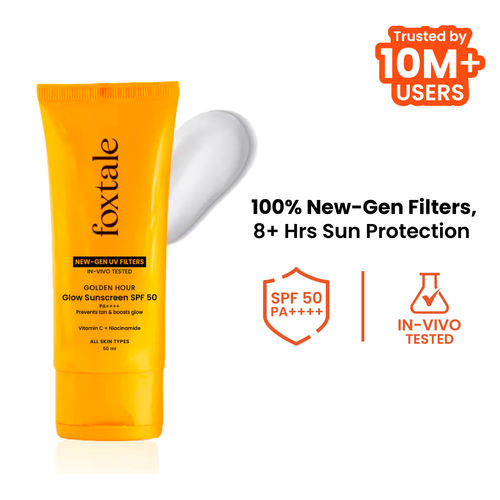
Foxtale Glow SPF 50
Dewy, hydrating fluid
Glow-seekers with dry skin
Skip if you want matte finish
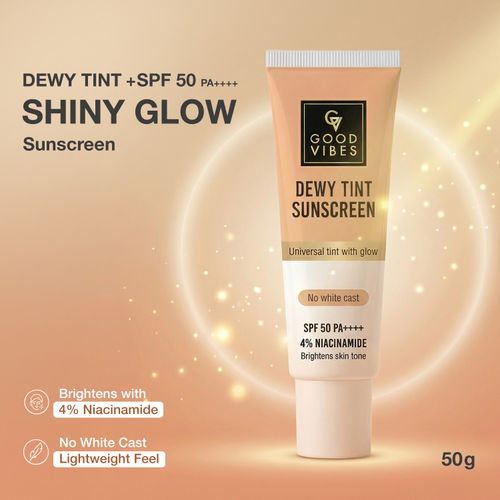
Good Vibes Dewy Tint SPF 50
Tinted, dewy fluid
Tone correction plus hydration
Skip if you avoid tinted sunscreen
How to Use Sunscreens
Apply sunscreen as the last step of your morning routine, after moisturiser but before makeup or SPF-infused
foundation. This lets the actives in your moisturiser sink in first while the sunscreen sits on top to do its
actual job: blocking UV rays.
Use roughly a teaspoon for the face and neck alone, about the length of your index and middle finger
together, rather than a thin swipe. Most people apply less than half this amount, which quietly cuts the
labelled SPF number down to a fraction of what's on the tube.
Wait about two to three minutes before stepping out or touching your face, so the formula sets into a film
instead of sliding off on your dupatta or pillow. On dry skin especially, a rushed application tends to sit in
flaky patches instead of blending in.
Pair it with a hydrating moisturiser underneath if your skin feels tight by midday, but skip layering it
under heavy, oil-based creams that can pill and leave a greasy cast. Dry skin still needs SPF reapplication,
so carry a compact stick or spray version for touch-ups over makeup.
Reapply every two to three hours if you're outdoors, and don't skip this step just because Indian summers
feel "used to" by now. Prolonged sun exposure between April and June, especially in north and central India,
breaks down sunscreen filters faster than the label suggests.
One thing worth remembering: keep the tube out of direct heat, glove compartments and sunny
windowsills. Indian summers routinely push car interiors past 45°C, and that kind of heat degrades UV filters
and separates the formula well before the expiry date printed on the box.
Frequently Asked Questions
What's the best sunscreen for dry skin in India in 2026?
Look past the SPF number and check what else the formula is doing for your skin. The Dot
& Key Blueberry Hydrate Barrier Repair Sunscreen SPF 50+ pairs ceramides with hyaluronic acid, so it
shields skin from UV rays while replenishing the lipids dry skin loses fast under India's harsh sun and
AC-heavy office days.
Does sunscreen make dry skin worse or flakier?
A poorly matched one can. Gel or matte-finish sunscreens made for oily skin tend to sit
badly on parched skin and can accentuate flaking. Cream-based formulas with humectants, like the Minimalist
SPF 50 with niacinamide and vitamin B5, work with dry skin instead of against it. Flaking is usually an
under-moisturizing problem, not a sunscreen problem.
How much sunscreen should you actually apply if you have dry skin?
About two fingertip-lengths for the face and neck, roughly a teaspoon's worth. Most
people apply far less than this, which is why sunscreens rarely deliver their labeled SPF in daily life. On
dry skin, skimping also shows up as patchiness, since flaky areas soak up product unevenly compared to
smoother patches.
How often should you reapply sunscreen if your skin is dry?
Every two to three hours outdoors; you can stretch that indoors away from direct light.
Reapplying over makeup puts people off, so a lightweight, dewy-finish formula like the Foxtale Glow Sunscreen
with vitamin C and niacinamide makes the habit less of a chore than a heavy, cakey one would.
Are the products sold on Purplle genuine?
Yes. Purplle runs an inventory-led model rather than an open marketplace, so products come
from brands or authorised distributors instead of unverified third-party sellers. That matters specifically
with sunscreen, since a mishandled or expired batch of UV filters won't give the protection the label
promises.
What's the difference between the SPF and PA numbers on a sunscreen?
SPF measures protection against UVB rays, which cause sunburn and surface tanning. PA,
marked with plus signs, measures UVA protection, which plays a bigger role in fine lines and pigmentation over
years of exposure. For dry, pigmentation-prone skin, a high PA rating deserves as much attention as the SPF
figure.
A broad spectrum sunscreen with an SPF of at least 30 is recommended with sun‐protective measures, like
avoidance of sun exposure and protective clothing.. pmc.ncbi.nlm.nih.gov. https://pmc.ncbi.nlm.nih.gov/articles/PMC12439021
With the rule of nines, the body's surface area is divided into 11 areas, each representing roughly 9% of
the total (box).. pmc.ncbi.nlm.nih.gov. https://pmc.ncbi.nlm.nih.gov/articles/PMC1123459
Hyaluronic acid and niacinamide are skincare ingredients that you'll find in many CeraVe products, such as
our Eye Repair Cream and Skin Renewing Night Cream.. cerave.com. https://www.cerave.com/ingredients-in-cerave/niacinamide